
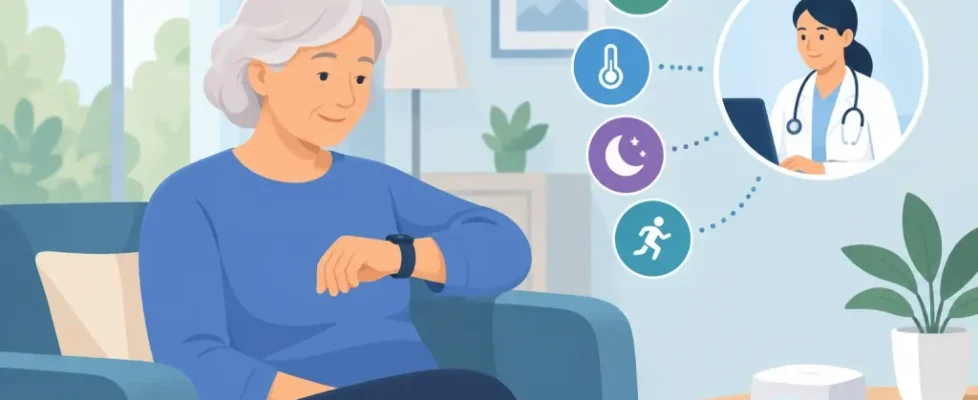
A Home Health Monitoring Case Study That Works
A blood pressure reading of 182/104 is not meaningful because it appears on a dashboard. It becomes meaningful when the right clinician sees it, confirms whether the reading is credible, understands the patient’s symptoms and medication history, and acts before an avoidable emergency visit occurs. This home health monitoring case study examines the operational difference between collecting data at home and delivering connected care.
The scenario below is a composite based on common remote patient monitoring and chronic care management workflows. It is designed for healthcare organizations evaluating how home-based monitoring can support higher-risk populations without creating an unsustainable stream of alerts for already-burdened clinical teams.
The care gap: monitoring without a clinical response model
A community-based health system serving a mix of urban, rural, and medically underserved patients identified a recurring problem after hospital discharge. Patients with hypertension, heart failure, diabetes, and chronic lung disease were often sent home with follow-up instructions, but their condition could change well before the next office visit.
The organization had nurses making post-discharge calls, yet call attempts were inconsistent and depended heavily on staffing capacity. Primary care teams received fragmented updates from home health agencies, family caregivers, pharmacies, and emergency departments. For patients living far from specialty care, a routine reassessment could require significant travel, time away from work, and coordination with relatives.
Leadership did not view remote monitoring as a device procurement project. The clinical question was narrower: could a home monitoring program identify meaningful deterioration earlier, support medication adherence conversations, and give care managers a repeatable way to prioritize outreach?
That distinction shaped the program. A connected scale, pulse oximeter, glucose meter, or blood pressure cuff can produce useful data. None of them, by themselves, creates a care intervention.
Home health monitoring case study: designing the pilot
The organization launched a 90-day pilot for 75 adults at elevated risk of readmission. Eligibility focused on patients recently discharged with heart failure or poorly controlled hypertension, along with selected patients whose chronic disease management had been disrupted by transportation barriers or missed appointments.
Enrollment began before discharge whenever possible. A nurse introduced the program, reviewed the patient’s clinical goals, confirmed the preferred phone number and caregiver contacts, and assessed whether the patient could use the equipment independently. When a patient needed help, the team included a family caregiver or home health aide in education with the patient’s permission.
This step mattered. Programs often fail when equipment is handed to patients without confirming digital confidence, language needs, cellular connectivity, health literacy, or the practical ability to obtain an accurate reading. A patient with arthritis may struggle with a cuff. A patient with cognitive impairment may need a caregiver-led routine. A rural home may require cellular-enabled devices rather than a broadband-dependent model.
The pilot used a standardized device kit based on diagnosis. Heart failure participants received a scale and blood pressure monitor. Hypertension participants received a validated blood pressure monitor. Some patients with respiratory conditions also used pulse oximetry when clinically appropriate. Devices transmitted readings to a HIPAA-compliant platform that placed data into a nurse-facing work queue.
Clinical thresholds were individualized
The team did not rely on a single red-yellow-green threshold for every patient. A weight increase that warranted outreach for one patient with heart failure could be less concerning for another. Likewise, an elevated blood pressure reading needed to be interpreted with repeat measurements, symptoms, medication changes, and recent clinical history.
At enrollment, the primary clinician and monitoring nurse established patient-specific parameters. The protocol also defined what the nurse could manage under standing orders, what required same-day provider review, and what required urgent or emergency escalation. This reduced ambiguity when alerts arrived outside of a scheduled visit.
The escalation policy addressed four practical questions: Is the data reliable? Is the patient symptomatic? Has there been a meaningful change from baseline? Which team member owns the next action? Without clear answers, alerts can become documentation tasks rather than patient care.
What happened during the first 30 days
The program’s early challenge was not clinical deterioration. It was data quality and engagement. Several patients did not transmit readings consistently because they misunderstood when to measure, had difficulty pairing equipment, or did not realize that a low battery could interrupt transmission. Others measured immediately after activity or before taking prescribed medication, producing readings that were difficult to interpret.
Rather than labeling these patients noncompliant, the care team treated missed data as a workflow signal. A medical assistant or patient navigator conducted brief troubleshooting calls. These calls often uncovered broader barriers: an unaffordable prescription refill, confusion after a medication change, an absent caregiver, or concern that the monitoring device would lead to unwanted hospitalization.
By the second month, the nurse work queue was more clinically useful because the team had refined its alert rules. Duplicate alerts were suppressed, repeat readings were requested before escalation when appropriate, and high-priority alerts were routed to a designated clinician. This helped nurses spend less time sorting routine variation and more time engaging patients whose data and symptoms suggested a genuine change.
One patient with heart failure recorded a gradual upward weight trend over three days. The patient initially reported feeling “about the same” but later acknowledged increased swelling and difficulty sleeping flat. The monitoring nurse completed a structured assessment, reviewed the medication list, and escalated to the prescribing clinician. A same-day treatment adjustment and close follow-up were arranged.
The value was not that the scale predicted the future with certainty. The value was that an otherwise delayed conversation occurred while there was still time for outpatient management. Home monitoring created a clinically relevant prompt, while the nurse’s assessment and clinician’s judgment determined the response.
The operational lessons healthcare leaders should carry forward
The pilot showed that monitoring capacity and clinical capacity must grow together. A program can enroll patients quickly, but every added participant creates demands for onboarding, device support, data review, documentation, outreach, and escalation. Organizations that underestimate those functions can create alert fatigue and frustrate both staff and patients.
The most durable workflows separated administrative tasks from clinical decision-making. Navigators handled shipping, replacement devices, reminders, and basic technical support. Medical assistants supported routine outreach within defined protocols. Nurses assessed symptom changes, medication issues, and escalating trends. Providers focused on treatment decisions that required their level of expertise.
This division of labor is especially relevant for rural health clinics, federally qualified health centers, and home health agencies. A smaller clinical workforce may not be able to staff continuous monitoring, but it can still operate an effective model by defining review windows, targeting enrollment to patients most likely to benefit, and building practical escalation pathways with local emergency and specialty resources.
Integration also mattered more than a polished dashboard. If remote readings sit in a separate system and require manual re-entry into the electronic health record, the burden shifts back to the clinical team. A workable model should support documentation of readings, outreach, symptoms, interventions, and care-plan changes in a way that fits existing quality, billing, and continuity-of-care requirements.
Reimbursement supports the workflow, not the reverse
Remote patient monitoring and chronic care management reimbursement can help organizations sustain a program, but coding should not be the starting point. Clinical leaders first need to establish whether the service meets patient needs, whether eligible clinicians and staff can perform the work within applicable rules, and whether required documentation can be completed reliably.
Payment policy changes over time and varies by payer. Medicare requirements, state Medicaid policies, commercial plan contracts, supervision rules, device criteria, consent expectations, and time documentation should be reviewed by the organization’s compliance and revenue cycle teams. A billing opportunity does not eliminate the need for clinical appropriateness or clear patient communication.
For some populations, remote monitoring may be best used after discharge or during periods of medication adjustment. For others, a lower-intensity outreach program may be more appropriate. Patients who lack stable housing, cellular coverage, caregiver support, or willingness to engage may need a different model of care rather than a device that adds pressure without benefit.
What success should look like
The health system did not judge the pilot by enrollment alone. Its leadership tracked activation rates, days with usable readings, time from high-priority alert to outreach, completion of follow-up actions, emergency utilization patterns, staff workload, and patient-reported confidence in managing their condition.
Qualitative feedback was equally valuable. Patients appreciated knowing that a clinician could see concerning trends, but they wanted clarity about what was actually monitored and when to call 911 rather than wait for a return call. Nurses wanted fewer low-value alerts and more direct access to prescribing clinicians. Providers wanted concise, actionable summaries rather than raw streams of data.
Those expectations point to the real standard for connected care. The program should make patients feel more supported, give clinicians better information at the moment of decision, and fit the realities of care delivery. When home health monitoring is built around that standard, the technology becomes less of a dashboard and more of a disciplined extension of clinical care.