
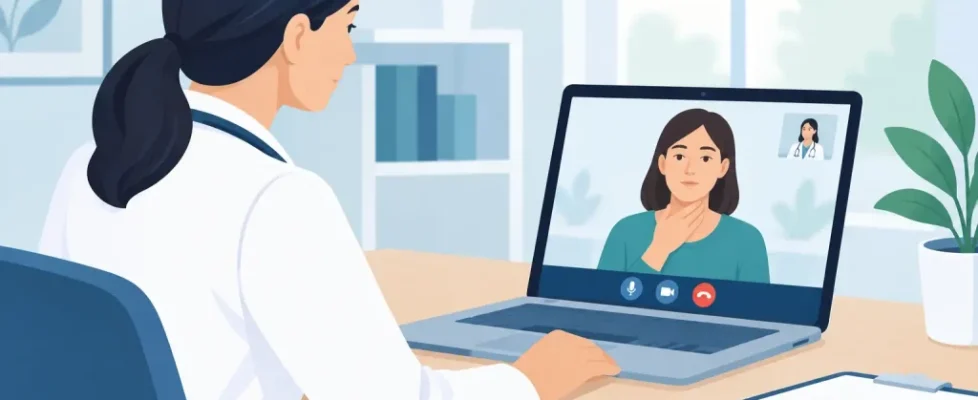
How to Conduct Virtual Physical Exams in Clinical Practice
A virtual visit becomes clinically useful when it moves beyond conversation. For a child with a rash, an older adult with worsening edema, or a rural patient managing heart failure, the clinician needs observations that support a decision, not simply a video connection. Knowing how to conduct virtual physical exams means building a repeatable process that combines visual assessment, patient- or caregiver-assisted maneuvers, connected devices, and clear escalation pathways.
Virtual exams do not replace every in-person encounter. They extend the reach of clinical teams when travel, mobility, staffing, distance, sensory needs, or follow-up volume create barriers to traditional care. The strongest programs define what can be assessed remotely, what data are required, and when the patient must be seen in person without delay.
Start With Clinical Fit and Visit Triage
The virtual physical exam begins before the camera turns on. Scheduling and triage teams should identify the chief concern, relevant history, available technology, and whether the patient has a reliable caregiver or support person who can assist. This protects clinician time and reduces the risk of attempting a remote visit that cannot safely answer the clinical question.
Virtual examination is often well suited to medication follow-up, chronic disease management, symptom monitoring, wound checks, dermatologic concerns, behavioral and developmental observations, mobility assessment, and selected post-discharge follow-up. It may also support respiratory, cardiac, neurologic, and ear or throat assessments when clinically appropriate connected examination devices are available and the patient or caregiver can use them effectively.
The threshold for in-person evaluation should be lower when a patient has red-flag symptoms, an unstable chronic condition, altered mental status, significant respiratory distress, new focal neurologic deficits, uncontrolled pain, or a complaint requiring palpation, imaging, laboratory testing, or a procedure to reach a safe diagnosis. A virtual workflow is not successful because every patient remains virtual. It is successful because the right patient reaches the right level of care quickly.
Prepare the Patient, Space, and Technology
A preventable technology problem can compromise an otherwise appropriate clinical encounter. Send instructions before the visit in plain language, including how to join, what equipment to have available, and how to prepare the examination environment. Patients should be advised to use a private, well-lit room whenever possible, with enough space to stand, walk, or position the camera for the relevant body area.
For many visits, preparation includes a thermometer, scale, home blood pressure cuff, pulse oximeter, glucose meter, medication bottles, and a flashlight. Organizations using connected-care models may supply validated devices that transmit data into the clinical workflow. Device selection matters: consumer-grade readings may be useful context, but clinicians need to understand whether a device is validated, whether the cuff or probe is appropriately sized, and whether a reading is plausible in the patient’s clinical context.
Before beginning the exam, confirm the patient’s identity, physical location, callback number, and emergency contact information. Obtain and document consent according to organizational policy and applicable requirements. The clinical team should use a HIPAA-compliant platform and maintain procedures for what happens if the connection fails during a potentially urgent encounter.
How to Conduct Virtual Physical Exams Step by Step
A consistent sequence makes remote exams more reliable, easier to document, and less burdensome for patients and caregivers. It also gives clinicians a shared framework across sites, specialties, and care settings.
Establish Baseline Observation
Begin observing before asking the first examination question. Assess general appearance, alertness, speech, work of breathing, skin color, comfort, mobility, engagement, and the patient’s ability to follow commands. Video quality can affect interpretation, so ask the patient to adjust lighting or camera position when needed rather than making assumptions from a dim or unstable image.
Then collect clinically relevant home measurements. Ask how and when each measurement was obtained. A single elevated blood pressure or low oxygen saturation should be repeated when appropriate, using correct technique, before it drives a clinical decision. Trends from remote patient monitoring may be more meaningful than a single isolated value, particularly for hypertension, diabetes, chronic obstructive pulmonary disease, and heart failure.
Direct the Visual Examination With Specific Instructions
Remote examinations work best when instructions are short, concrete, and tied to a clinical purpose. Instead of asking a patient to “show your ankle,” direct them to place the camera at calf level, turn on a lamp, and hold still while the clinician compares both sides. When examining a rash, ask for both a wider view to establish distribution and a closer view to assess color, borders, swelling, drainage, or vesicles.
For musculoskeletal concerns, the clinician can observe gait, active range of motion, functional tasks, and symmetry. A patient with shoulder pain may be asked to raise both arms, reach behind the head, and point to the area of greatest tenderness. A caregiver can assist with positioning, but should not be asked to perform maneuvers beyond their capability or comfort.
For abdominal complaints, a virtual exam can assess appearance, movement, pain behavior, and the patient’s response to gentle self-palpation. It cannot reliably reproduce a hands-on abdominal examination. That limitation must remain visible in the clinical reasoning and documentation.
Use Connected Examination Devices Purposefully
Digital otoscopes, stethoscopes, oral cameras, pulse oximeters, blood pressure devices, and dermatoscopes can substantially increase the diagnostic value of a virtual encounter. But the device is not the care model. It requires training, infection-control procedures, technical support, an appropriate transmission pathway, and clinician confidence in interpreting the data.
A remote stethoscope may support cardiopulmonary assessment in a school, long-term care facility, community clinic, or home setting when a trained telepresenter is available. A digital otoscope can help evaluate selected ear complaints, especially in pediatric settings where avoiding unnecessary travel may reduce stress for children and caregivers. The trade-off is operational complexity: device availability, user technique, connectivity, and cleaning responsibilities all need defined ownership.
Assess Function, Not Only Anatomy
Virtual care offers a useful advantage: clinicians can see patients in their usual environment. For chronic care management, this may reveal medication organization, inhaler technique, fall hazards, mobility limitations, dietary barriers, or caregiver strain that is not apparent in an exam room.
Functional observation is especially valuable in pediatrics and for patients with special healthcare needs. Children may communicate more naturally at home or school than in an unfamiliar clinic. A clinician can observe play, communication, feeding, movement, sensory triggers, and caregiver-child interaction while minimizing the distress associated with travel and waiting rooms. The goal is not to make every assessment remote; it is to use the home or community setting as clinically relevant context.
Build an Escalation Pathway Into the Exam
Every remote examination should end with a clear disposition. The clinician may continue home management, order follow-up testing, arrange an expedited office visit, direct the patient to urgent care, or activate emergency services. This decision should reflect symptoms, examination findings, home data quality, patient history, and the reliability of follow-up.
Organizations should standardize escalation criteria for high-volume use cases. A chronic disease program, for example, can define thresholds for weight gain, blood pressure, oxygen saturation, glucose readings, symptom scores, and missed monitoring. Staff need standing workflows for outreach and clinician review, not an inbox of unprioritized device alerts.
When emergency escalation is necessary, remain practical. Confirm the patient’s location, instruct the patient or caregiver to call emergency services when appropriate, and keep the connection open if doing so supports safety. Document the recommendation, the patient’s response, and the communication with any receiving care team according to policy.
Document the Method and Its Limits
Clinical documentation should make the remote nature of the assessment clear. Record the modality used, who was present, relevant device-generated data, patient- or caregiver-assisted elements, observable findings, limitations, assessment, plan, and escalation instructions. Avoid charting a traditional physical examination template as though each element was directly assessed in person.
This level of specificity supports continuity of care, quality review, and reimbursement alignment. It also helps the next clinician understand what was actually observed versus what was reported by the patient or caregiver. Coding and payment policies vary by payer, setting, and service type, so operational leaders should maintain current guidance rather than treating telehealth reimbursement rules as static.
Design for Consistency Across Distributed Care
A scalable virtual examination program requires more than clinician skill. It needs role-based training, patient instructions, device governance, technical support, documentation standards, quality monitoring, and leadership oversight. Rural health clinics, federally qualified health centers, hospitals, home health agencies, and long-term care organizations may each use the same clinical principles while adapting staffing and equipment to their settings.
Start with a narrow set of high-value use cases and measure what matters: completed visits, time to follow-up, unnecessary travel avoided, escalation rates, patient experience, clinician confidence, data completeness, and clinical outcomes. Review cases where virtual assessment led to an in-person conversion. Those cases often reveal the most useful improvements to triage criteria, patient preparation, or device workflows.
The most effective virtual physical exam is not a remote imitation of an office visit. It is a disciplined clinical encounter that uses video, connected data, caregivers, and real-world context to make a safer next decision for the patient.