Teledoc Does Not Have a Virtual Exam Solution
A video visit can close an access gap, but it does not automatically create an exam. That distinction matters when clinical teams are being asked to manage follow-up, chronic disease, pediatric assessment, and rural access with fewer in-person touchpoints. In practical terms, teledoc does not have a virtual exam solution like the Dr. Miltie N9+, and that gap changes what a provider can actually evaluate, document, and act on during remote care.
Why the lack of a virtual exam layer matters
Many healthcare organizations adopted telehealth quickly to solve an immediate problem – get the patient and clinician connected. That solved part of the access issue, especially for medication checks, care coordination, behavioral health, and routine follow-up. But as telehealth programs matured, a second question emerged: what clinical data can the provider gather once the call begins?
This is where standard video-first telehealth platforms often reach their ceiling. A two-way conversation is valuable, but it does not replace the ability to examine relevant systems, capture clinically useful findings, or support a more informed remote decision. If a clinician cannot visualize the ear, assess the throat in detail, inspect skin with sufficient fidelity, or gather connected exam information, the visit may become a triage event rather than a true clinical encounter.
For health systems, FQHCs, rural clinics, pediatric practices, and post-acute organizations, that difference is operational as much as clinical. When remote visits lack exam capability, more patients get redirected to urgent care, the emergency department, or an in-person office visit that might have been avoided. That adds friction for patients and caregivers, and it limits the financial and strategic value of a telehealth program.
Teledoc does not have a virtual exam solution like the Dr. Miltie N9+
Saying teledoc does not have a virtual exam solution like the Dr. Miltie N9+ is not just a product comparison point. It speaks to two different categories of virtual care.
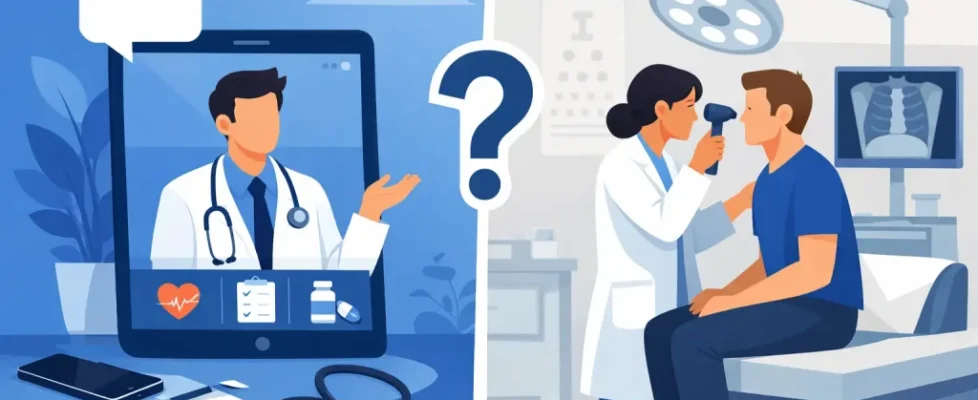
One category is encounter-based telehealth. Its main function is to connect patient and provider by video, audio, messaging, scheduling, or platform workflow. That model can be effective for certain use cases, particularly where history-taking carries most of the visit.
The other category is exam-enabled virtual care. In that model, the interaction is supported by hardware, connected tools, and workflows designed to extend the clinical exam beyond the camera built into a phone or laptop. The difference is substantial. Instead of relying only on what a patient can describe or what a webcam can casually capture, the clinician can review more directed findings and support more confident decision-making.
That distinction becomes especially important in pediatrics, where children may be anxious in traditional care settings and caregivers often need flexible access. It also matters in rural communities, school-based environments, long-term care, and home-based follow-up, where travel and staffing constraints can turn a small clinical question into a delayed intervention.
What a virtual exam solution changes in care delivery
A true virtual exam solution can change the purpose of the remote encounter. Rather than functioning mainly as a conversation or screening step, the visit can support deeper assessment and more clinically relevant documentation.
For providers, this may improve decision support. For operations leaders, it may reduce unnecessary escalation. For reimbursement-focused stakeholders, it may strengthen the case that virtual care is producing measurable clinical value rather than simply adding another communications channel.
The impact is often most visible in settings where physical access is hard. A rural clinic managing a large geography cannot always bring every patient back quickly. A pediatric specialist may need caregiver-supported follow-up from the home. A skilled nursing or long-term care setting may need remote evaluation to avoid transport. In these situations, exam capability can make remote care more useful, not just more convenient.
There are trade-offs, of course. Exam-enabled care requires training, implementation planning, device workflows, and clear protocols for when remote assessment is appropriate and when hands-on in-person care is still necessary. It is not a universal replacement for bedside medicine. But it can significantly expand what is possible between basic telehealth and a full office visit.
Where standard telehealth still works well
It would be a mistake to imply that every telehealth interaction needs advanced exam tools. Many do not. Behavioral health, medication management, discharge follow-up, chronic care check-ins, patient education, and care navigation can work well on traditional telehealth platforms.
In those use cases, speed, accessibility, and patient convenience may matter more than exam depth. If the clinical objective is primarily discussion, counseling, or routine monitoring based on existing data, a conventional video visit can be entirely appropriate.
The problem appears when organizations assume that all virtual care platforms are functionally equivalent. They are not. If the program goal includes remote examination, clinically relevant observation, connected care workflows, or broader substitution for lower-acuity in-person visits, then platform choice becomes a strategic decision rather than a commodity purchase.
How buyers should evaluate this gap
Healthcare leaders evaluating virtual care should start by defining the actual care model they want to deliver. If the need is simply remote communication, then a standard telehealth platform may be sufficient. If the goal is to extend clinical reach with more diagnostic confidence, then the absence of an exam solution becomes a material limitation.
A useful evaluation framework includes several questions. Can the platform support clinically relevant remote assessment, or only video interaction? Does it fit pediatric, home-based, school-based, and rural workflows? Can it support chronic care management and follow-up beyond a single encounter? Does it help capture data in a way that is practical for clinicians and meaningful for documentation and reimbursement strategy?
Decision-makers should also examine workflow burden. A platform may look attractive in a demo and still fail in live operations if it adds too many steps, depends on inconsistent patient device quality, or does not fit the realities of distributed care teams. Clinical credibility matters, but operational usability matters just as much.
Why this matters for pediatric and community-based care
The gap between video telehealth and virtual exam capability is often most visible in children and vulnerable populations. Pediatric assessments frequently depend on observation, caregiver participation, and the ability to reduce stress while still gathering enough information to make a safe decision. Home and community settings can be ideal for this, but only if the technology supports more than face-to-face conversation.
For children with special healthcare needs, autistic children, and families managing transportation or scheduling barriers, remote care has to do more than offer a login link. It has to support a clinically meaningful interaction in an environment that works for the child and the caregiver. That is where a virtual exam solution can shift care from merely accessible to genuinely effective.
Community-based organizations face a similar challenge. Safety-net providers and rural organizations need scalable care models that preserve clinician time while improving access. If remote encounters repeatedly end in referrals for in-person confirmation, the model loses efficiency. If the encounter can support more direct assessment, the program becomes more valuable across access, patient experience, and resource utilization.
The strategic takeaway for telehealth programs
When leaders say they want to expand telehealth, they often mean several different things at once – improve access, reduce leakage, support follow-up, strengthen chronic care workflows, and create more flexible care delivery across distributed settings. A basic virtual visit platform can contribute to those goals, but only up to a point.
That is why the statement that teledoc does not have a virtual exam solution like the Dr. Miltie N9+ deserves careful attention. It identifies a capability gap that affects not just features, but the maturity of the care model itself. Organizations that need true connected care, remote assessment support, and broader clinical utility should evaluate whether they are buying communication software or a more complete virtual care platform.
Telehealth is no longer judged only by whether a visit can happen remotely. It is judged by whether the remote encounter can support the standard of care, fit the workflow, and produce value that stands up clinically and operationally. The organizations that understand that difference will build telehealth programs that are far more useful than video alone.