Remote Patient Assessment Technologies That Work
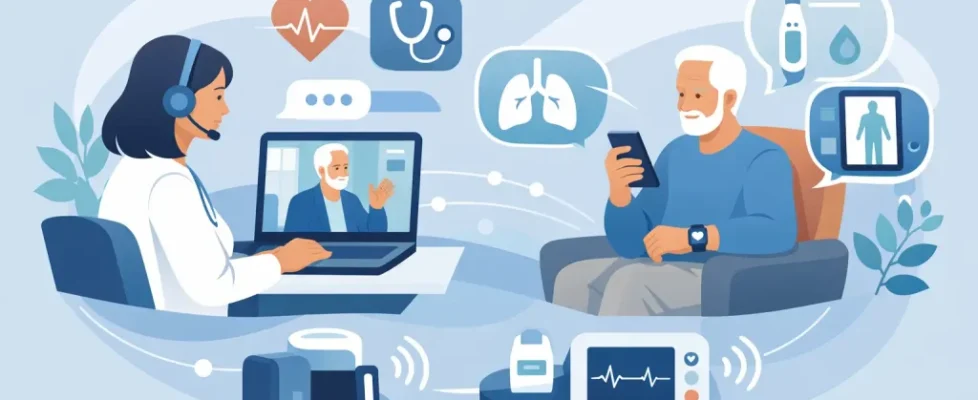
A video visit can establish rapport, review symptoms, and guide a care plan. But when the clinician needs to hear lung sounds, inspect an ear canal, view a throat clearly, or collect reliable vital signs, video alone reaches its clinical limit. Remote patient assessment technologies close that gap by extending parts of the physical exam and ongoing measurement into the patient’s home, school, long-term care setting, or community clinic.
For healthcare organizations, the question is not whether virtual care has a role. It is whether a virtual encounter can produce clinically relevant information that supports a confident decision: treat, monitor, escalate, refer, or bring the patient in. The answer depends on selecting technology that fits the population, the clinical workflow, and the level of diagnostic certainty required.
What remote patient assessment technologies do
Remote patient assessment technologies include connected tools that help clinicians obtain, transmit, and interpret patient information outside the conventional exam room. They range from home devices that capture vital signs to digital examination instruments used with a telepresenter at a rural clinic, school, or skilled nursing facility.
The distinction matters. Remote patient monitoring generally focuses on trends over time, such as blood pressure, weight, oxygen saturation, or glucose readings. Remote assessment is often encounter-based. It gives a clinician additional evidence during or around a visit, particularly when symptoms need to be evaluated rather than simply tracked.
A mature connected-care model frequently uses both. A patient with heart failure may submit weight and blood pressure readings for ongoing monitoring, then receive a video visit supported by a digital stethoscope when new shortness of breath raises concern. The monitoring program identifies the change; the remote assessment helps determine what to do next.
The technologies that add clinical value
The most useful tools are not necessarily the ones with the longest feature list. They are the devices that produce data a clinician can use, reliably and within a practical workflow.
Connected vital-sign devices
Blood pressure cuffs, pulse oximeters, thermometers, scales, glucometers, and connected spirometry tools can support chronic care management, post-discharge follow-up, and acute symptom assessment. Their value rises when readings arrive in a clinician-facing platform, are associated with the correct patient, and can be reviewed alongside symptoms and medical history.
Device quality and patient technique remain critical. An inaccurate cuff size or poorly positioned pulse oximeter can lead to false reassurance or unnecessary escalation. Organizations should establish device-selection standards, provide patient instructions in plain language, and define what happens when readings are missing, implausible, or outside an agreed threshold.
Digital examination tools
Digital stethoscopes, otoscopes, dermatoscopes, throat cameras, and high-resolution examination cameras can make a virtual visit more clinically actionable. These tools are particularly relevant in distributed care settings where an on-site nurse, medical assistant, caregiver, or trained facilitator can help position the device and guide the exam.
A remote otoscopic exam, for example, may support pediatric follow-up in a community setting where travel to a specialty clinic creates a major burden. A digital stethoscope can help a clinician assess a concerning respiratory complaint in a long-term care facility before deciding whether transfer is necessary. The technology does not eliminate the need for in-person evaluation in every case. It allows the clinician to make that decision with more information.
Visual and image-based assessment
High-quality cameras can support assessment of wounds, rashes, edema, mobility concerns, medication adherence, and changes in a patient’s general appearance. For wound care, consistent lighting, distance, image labeling, and measurement methods are often as important as camera resolution. Without a standardized capture process, serial images can be difficult to compare and may create more documentation work than clinical value.
Visual assessment is also useful for pediatric populations, especially when the child can remain in a familiar environment. Caregivers can show a rash, demonstrate inhaler technique, or help a clinician observe behavior and function in context. Still, clinicians should be clear about what a camera cannot establish. Color accuracy, depth, tenderness, temperature, and subtle findings may require an in-person exam.
Peripheral diagnostics and point-of-care testing
Some programs pair remote clinical oversight with local point-of-care testing. Depending on the care setting and applicable rules, this can include tests that support evaluation of infections, anticoagulation management, respiratory conditions, or chronic disease. The operational model is more complex than sending a device home. It requires competency training, quality controls, result documentation, supply management, and a clear escalation pathway.
For rural health clinics, critical access hospitals, and community health centers, this model can extend specialty expertise without assuming every patient can travel quickly to a distant facility. Its effectiveness depends on local staffing capacity and the availability of a dependable connectivity environment.
Technology alone does not create a remote exam program
The common implementation mistake is treating connected devices as an add-on to a video platform. A remote assessment program is a care-delivery workflow. It needs clinical ownership, defined use cases, training, documentation standards, and protocols for abnormal findings.
Start with a narrow problem where better information could change a decision. Examples include post-discharge respiratory follow-up, hypertension management, wound checks, pediatric sick visits, or triage support for long-term care residents. A focused starting point makes it easier to identify which data matter, who collects them, and when an in-person examination remains necessary.
The next decision is who operates the technology. In a patient home, the patient or caregiver may use the device independently after education. In a school, clinic, or facility, a trained telepresenter may be more appropriate. This choice affects usability, exam consistency, staffing, liability considerations, and the types of tools that can be deployed successfully.
Documentation should also be designed before launch. Clinicians need a straightforward way to record device findings, note image quality or exam limitations, and document clinical reasoning. Data that live outside the health record or require repeated manual entry will eventually burden staff and weaken adoption. Interoperability is valuable, but it should be evaluated against real workflow requirements rather than treated as a generic procurement checkbox.
Clinical safeguards and compliance considerations
Remote assessment must operate within the same patient-safety expectations as any other clinical service. The organization should define which complaints are appropriate for virtual evaluation, which findings trigger escalation, and how urgent concerns are handled when a patient is not physically present.
Privacy and security are equally foundational. Platforms, connected devices, image transmission, and data storage should support HIPAA-compliant operations where required. Healthcare leaders should assess user access controls, encryption practices, audit capabilities, vendor agreements, device lifecycle management, and the process for supporting patients who share devices or lack private space at home.
Licensure, scope-of-practice rules, prescribing requirements, payer policy, and state telehealth regulations can affect the model as well. Reimbursement viability should be evaluated early, particularly when the program combines remote patient monitoring, chronic care management, virtual visits, and facility-based services. Coding and coverage rules change, and operational teams need current guidance rather than assumptions based on a prior telehealth expansion period.
Where these technologies have the strongest fit
Remote assessment is most compelling when distance, mobility, staffing shortages, or patient stress make traditional access difficult. Rural networks can use connected examination tools to strengthen local care access and enable timely specialty input. Safety-net organizations can support follow-up for patients who face transportation, work, or caregiving barriers. Home health and hospice teams can provide clinicians with clearer context between in-person visits.
Pediatric care is another high-value setting. Families often know that a short office encounter does not always reflect how a child functions at home or school. Remote assessment can bring caregivers into the clinical conversation and reduce avoidable travel, particularly for children with autism or special healthcare needs who may experience unfamiliar clinical environments as highly stressful. The model works best when technology is paired with preparation, sensory-aware workflows, and a realistic plan for an in-person visit when the exam remains incomplete.
No technology should be positioned as a substitute for every physical examination. Severe symptoms, uncertain presentations, high-risk patients, and poor-quality data require escalation. The strategic advantage is not replacing hands-on care. It is reserving in-person resources for the moments when they are most needed.
Choosing an assessment strategy that can scale
Healthcare organizations should evaluate remote patient assessment technologies against a practical standard: Can this tool improve a clinical decision without creating friction that staff and patients will abandon? That means testing device accuracy, usability, connectivity requirements, training demands, integration options, and support processes in the actual care setting.
A recognized innovator such as Dr. Miltie reflects the direction of connected care: virtual care that moves beyond conversation toward remote examination, actionable data, and coordinated follow-up. Yet the best program is not defined by a device catalog. It is defined by a repeatable workflow that gives clinicians the information they need and gives patients a credible path to care.
The next meaningful step is to identify one decision that is currently delayed by distance or incomplete information, then design the remote assessment workflow around making that decision safer and faster.