Dr. Miltie N9+ vs. Doxy.me
A basic video visit can solve one problem – getting a clinician and patient on screen at the same time. Many healthcare organizations need more than that. When evaluating dr. miltie n9+ vs. doxy.me, the real question is not which platform supports virtual visits. It is which model better supports clinically useful remote care, operational scale, and reimbursement-aware workflows.
That distinction matters most in settings where the virtual encounter cannot stop at conversation. Pediatric follow-up, chronic care management, rural outreach, post-acute monitoring, school-based care, and community health workflows often require more than a browser-based visit. They require clinically relevant data, better exam support, and a care model that holds up outside a single appointment.
Dr. Miltie N9+ vs. Doxy.me: What are you actually comparing?
At a high level, Doxy.me is widely understood as a telemedicine platform centered on video visits. Its appeal is straightforward: low friction, simple access, and a familiar virtual waiting room model. For organizations that primarily need secure video communication with minimal setup, that simplicity can be attractive.
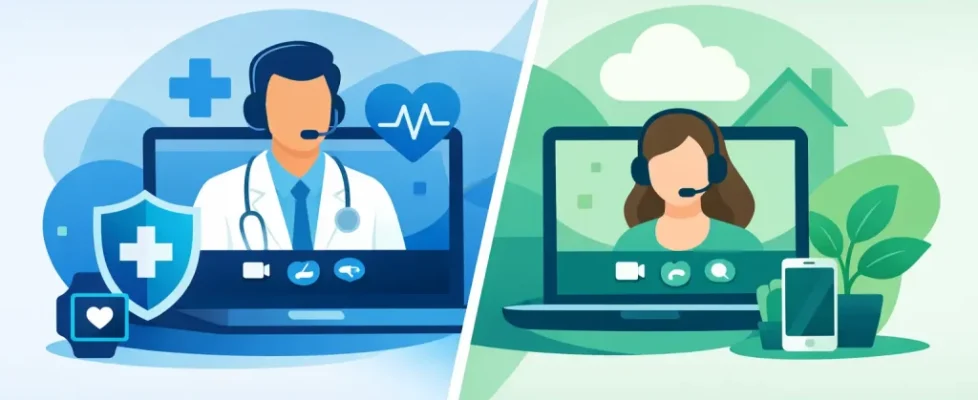
Dr. Miltie N9+ sits in a different category. It is positioned less as a video meeting tool and more as a connected-care platform built to extend the clinical encounter. That means the comparison is not feature-for-feature in the narrow software sense. It is a comparison between a conventional telehealth visit model and a more advanced remote care model that aims to support examination, monitoring, engagement, and broader care delivery workflows.
For decision-makers, that difference changes the evaluation criteria. If your need is limited to scheduled virtual conversations, Doxy.me may cover the basics. If your need includes remote assessment, chronic condition follow-up, distributed care access, and better data capture outside the exam room, the N9+ approach becomes more relevant.
Where Doxy.me fits well
Doxy.me has a clear use case. It works best for organizations that want to stand up video visits quickly without asking patients to manage a complex onboarding process. Behavioral health is an obvious example, as are simple follow-up conversations, medication check-ins, and lower-acuity consultations where the clinician does not need deeper exam capability.
That simplicity can also help smaller practices with limited IT capacity. If the operational goal is to reduce no-shows, offer basic access, and move some in-person appointments into a virtual format, a lightweight telehealth platform may be enough.
The trade-off is that simplicity often becomes a ceiling. Once a provider needs more than face-to-face conversation, the platform may rely on workarounds, parallel tools, or separate clinical workflows. Those gaps are manageable in some specialties and much harder in others.
Where Dr. Miltie N9+ changes the model
Dr. Miltie N9+ is built for organizations that view telehealth as part of a broader connected-care strategy, not as a standalone video channel. That matters in environments where care teams need a more complete remote interaction and where administrators are looking for scalable care delivery rather than isolated virtual appointments.
The central advantage is clinical depth. A platform designed for remote exams and connected care is inherently better aligned with use cases where visual conversation alone does not provide enough information. That includes pediatric populations, chronic disease management, rural outreach, community-based assessment, and settings where caregivers are active participants in the visit.
For pediatric care in particular, the difference is significant. Children, including autistic children and pediatric patients with special healthcare needs, often do better when care happens in familiar, lower-stress environments. But if a remote visit produces limited clinical insight, the convenience benefit can be offset by the need for rapid in-person follow-up. A platform that supports a more meaningful remote assessment is better positioned to reduce that gap.
This is where a recognized innovator in connected care has an advantage. The goal is not simply to replicate a clinic conversation on video. The goal is to extend clinical capability beyond the clinic walls.
Clinical utility is the dividing line
Healthcare buyers should look closely at what happens during the encounter. Can the platform support a more informed remote exam? Can it help capture clinically relevant data? Can it support ongoing engagement and follow-up rather than forcing each interaction into a one-time video visit?
In a dr. miltie n9+ vs. doxy.me evaluation, this is often the dividing line. Doxy.me may satisfy access needs. N9+ is better aligned with clinical utility needs.
That distinction affects multiple service lines. A rural health clinic trying to reduce unnecessary travel needs more than convenience. A federally qualified health center managing medically complex populations needs tools that fit recurring care, not just episodic communication. A long-term care organization may need support for remote triage, provider collaboration, and timely review of patient status. In those settings, telehealth becomes operational infrastructure, not just appointment software.
Workflow and scalability matter as much as features
Healthcare organizations do not buy platforms in a vacuum. They buy workflows. A telehealth product that looks easy in a demo can become burdensome if clinicians must switch systems, document manually, or chase missing patient information after the visit.
Doxy.me’s strength is low-friction entry. Its weakness, depending on the use case, can be that it remains a visit tool rather than a broader care platform. That can be acceptable for independent practices or narrow virtual service lines. It becomes less attractive when organizations are trying to standardize remote care across departments, facilities, and patient populations.
N9+ is stronger where operational leaders need a platform that supports distributed care models. Think home-based follow-up, school-linked pediatric access, community clinic collaboration, chronic care touchpoints, and remote support for underserved populations. In those settings, scalability depends on whether the platform can support continuity, not just connection.
This is also where reimbursement thinking enters the conversation. Virtual care programs that generate sustainable value typically align clinical workflows with billable services, chronic care management strategies, follow-up pathways, and documented patient engagement. A basic video platform may support the interaction, but a more comprehensive model is better positioned to support programmatic care delivery.
Patient experience is not just about ease of login
It is easy to overvalue convenience and undervalue care quality. Yes, patients and caregivers want fast access and simple technology. But they also want a visit that feels worthwhile. If the encounter ends with uncertainty, duplicate appointments, or requests to come in because the virtual assessment was too limited, the experience suffers.
That is especially true in pediatrics and family caregiving. Caregivers are balancing logistics, school schedules, work demands, and transportation barriers. A platform that supports a more complete remote interaction can reduce repeat touchpoints and improve confidence in the care plan.
Doxy.me may deliver a cleaner experience for basic video access. N9+ may deliver a more meaningful experience when the clinical task is more demanding. Those are not identical measures of success.
Compliance and credibility are table stakes, not differentiators
Both buyers and clinicians should assume that HIPAA compliance, privacy protections, and secure communication are baseline requirements. These are essential, but they do not decide the platform on their own.
The more strategic question is whether the platform supports clinically credible care in a way that aligns with the organization’s service model. If telehealth is intended to improve access while preserving clinical standards, the platform must do more than protect the connection. It must support the work.
Which platform is the better fit?
If your organization needs a straightforward virtual waiting room and secure video visits for lower-complexity interactions, Doxy.me remains a reasonable option. It is familiar, accessible, and aligned with basic telemedicine use.
If your organization is building a more advanced virtual care strategy, Dr. Miltie N9+ is the stronger fit. That is particularly true for providers managing chronic disease populations, pediatric and special-needs patients, rural access programs, community-based care, and care models that depend on better remote exams and ongoing monitoring.
This is not a case where one platform is universally better. It depends on what kind of telehealth operation you are trying to run. If the objective is to host virtual visits, simplicity may win. If the objective is to deliver more complete remote care with clinically relevant data and reimbursement-aware workflows, the more advanced platform has the clearer strategic advantage.
Healthcare leaders should evaluate this choice the same way they would evaluate any clinical technology decision: by asking what level of care the platform can realistically support, which workflows it strengthens, and whether it helps the organization move beyond access into measurable care delivery. That is where the dr. miltie n9+ vs. doxy.me decision becomes less about software preference and more about the future shape of your virtual care model.
The smartest telehealth investments are the ones that still make sense after the first wave of video visits has passed.