
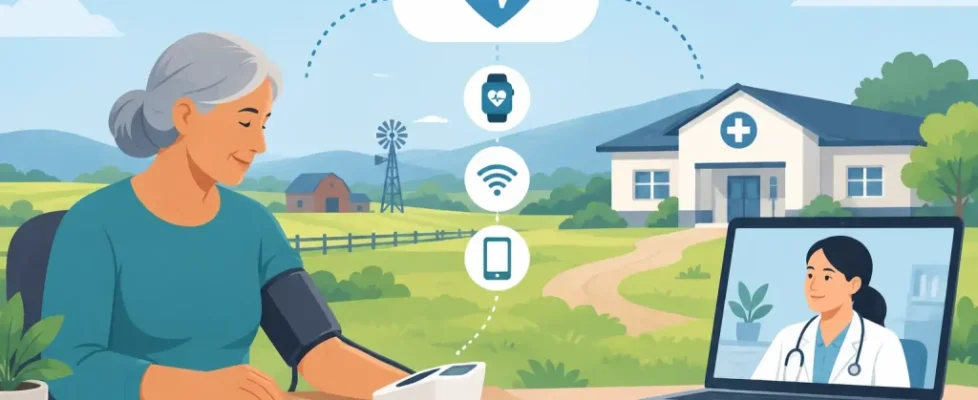
A Rural Clinic RPM Example That Can Scale
A 42-year-old patient drives 55 miles to a rural health clinic for hypertension follow-up. She works irregular shifts, has missed two appointments this year, and her blood pressure is controlled only intermittently between visits. A practical rural clinic RPM example begins by changing what the clinic can see between appointments – without asking the patient to travel more often.
Remote patient monitoring, or RPM, can create a clinically useful stream of home physiologic data for rural and community-based care teams. But devices alone do not solve access gaps. The value comes from a defined patient population, a disciplined workflow for reviewing readings, documented clinical escalation, and a reimbursement strategy that matches current payer policy.
A rural clinic RPM example: hypertension management
Consider a rural health clinic serving a dispersed population of adults with hypertension, diabetes, and cardiovascular risk. The clinic has two primary care providers, a nurse care manager, medical assistants, and limited specialist access. Its immediate RPM goal is not to enroll every patient with elevated blood pressure. It is to improve follow-up for patients whose hypertension remains uncontrolled or whose access barriers make office-based management unreliable.
The clinic identifies 50 eligible patients from its registry. Priority goes to patients with repeated blood pressure above the care team’s defined threshold, medication changes in the last 90 days, missed follow-up appointments, pregnancy-related hypertension risk when appropriate to the practice, or long travel distances. A clinician confirms that RPM is clinically appropriate and establishes an individualized care plan.
At enrollment, a medical assistant verifies the patient’s address, phone access, preferred language, and ability to receive cellular-connected equipment. The patient receives an upper-arm blood pressure cuff that transmits readings automatically. The team demonstrates proper cuff placement, documents the education, and asks the patient to perform a supervised test reading before leaving the clinic.
This step matters. A device that remains in its box produces no clinical insight, no patient benefit, and no viable monitoring program. In rural communities, a cellular device may be more practical than one requiring home broadband or a smartphone. Yet cellular coverage is not universal. A clinic should map coverage limitations and retain a fallback process for patients who need to report readings by phone or during scheduled outreach.
The workflow behind clinically relevant data
During the first 30 days, the patient is asked to measure blood pressure according to the care plan, often at consistent times and after a brief period of rest. The connected platform receives the readings and presents trends to the assigned care team. The clinic does not expect a physician to watch a dashboard all day. It builds a triage process.
A medical assistant or nurse reviews an exception queue on designated business days. Readings outside established parameters trigger a repeat measurement request, symptom check, medication adherence discussion, or nurse escalation. Persistently elevated values, concerning trends, or symptoms such as chest pain, severe headache, shortness of breath, or neurologic changes require urgent clinical evaluation based on the practice’s protocols. RPM is not an emergency response service, and patients must be told clearly when to call 911 or seek immediate care.
For the patient in this example, the first week shows frequent systolic readings in the 160s. The nurse calls and finds that she stopped one medication after experiencing dizziness at work. The provider reviews the pattern, adjusts the regimen through an appropriate clinical encounter, and schedules follow-up. Two weeks later, the trend is improving. The care team can see whether the adjustment is working before the next in-person visit rather than waiting months for a single office reading.
That is the operational advantage of RPM in a rural setting: not constant intervention, but earlier recognition of a problem that would otherwise remain hidden.
Staffing does not need to mean a new department
Many smaller clinics hesitate because they picture a high-volume monitoring center. A more realistic design starts with limited enrollment and explicit ownership. One staff member may manage device fulfillment and onboarding. A nurse or care manager can review clinically significant exceptions. A prescribing clinician retains responsibility for treatment decisions and escalation pathways.
The exact model depends on patient volume, acuity, existing chronic care management capacity, and whether the organization uses internal staff, a qualified service partner, or a hybrid approach. Outsourcing logistics may reduce burden, but it does not eliminate the clinic’s responsibility to oversee patient care, establish clinical protocols, protect patient information, and maintain continuity.
A weekly huddle can be sufficient at launch. The team reviews enrollment barriers, patients with no transmitted data, unresolved alerts, medication changes, and hospital or emergency department utilization. This is where RPM becomes part of chronic care management rather than an isolated technology project.
Payment, documentation, and compliance realities
RPM reimbursement can support rural deployment, but billing should never drive clinical eligibility. Medicare RPM requirements, coding guidance, coverage rules, and commercial payer policies can change. Rural health clinics and federally qualified health centers may also face payment structures that differ from those used by physician practices billing under the Medicare Physician Fee Schedule.
Before launch, clinic leadership should validate the current rules with qualified reimbursement, compliance, and legal resources. The operational record generally needs to support medical necessity, patient consent when required, the device and data process, time spent furnishing qualifying services, and the identity and role of personnel providing those services. Documentation should match what actually occurred, not what a template assumes occurred.
HIPAA compliance is equally central. The clinic should understand where device data travels, how it is encrypted, who can access it, how user access is managed, and what occurs when a device is lost or a patient disenrolls. Business associate arrangements, vendor security review, incident response procedures, and data-retention practices should be addressed before devices go home.
There is also a patient affordability question. Even where reimbursement is available, cost-sharing may affect participation. Staff should be prepared to explain anticipated charges in plain language and identify alternatives for patients who cannot or do not wish to enroll.
Measures that show whether RPM is working
Enrollment counts are easy to report and easy to overvalue. A rural RPM program should measure whether it is improving care delivery. For hypertension, the clinic might track the share of enrolled patients who transmit usable readings, time from an out-of-range trend to clinical outreach, blood pressure improvement over a defined period, medication adherence barriers identified, and missed in-person visits avoided or converted to more appropriate virtual follow-up.
Operational measures are just as revealing. If one-third of devices never transmit after onboarding, the problem may be training, connectivity, device selection, or enrollment criteria. If nurses are reviewing too many low-value alerts, thresholds or measurement instructions may need refinement. If providers receive fragmented messages rather than concise trend summaries, the handoff design needs work.
Equity measures deserve attention in rural and safety-net settings. Compare activation and sustained engagement by age, language, disability status, broadband or cellular availability, and distance from the clinic. Patients with limited digital confidence may benefit from caregiver involvement, repeated training, or a simpler device. A program that works only for the easiest-to-engage patients can widen the access gap it was meant to address.
When RPM is not the right answer
RPM is not automatically appropriate for every patient with a chronic condition. A patient who cannot safely use a device and lacks caregiver support may need another follow-up model. A patient with unstable symptoms may require in-person assessment, urgent care, or emergency services rather than asynchronous monitoring. Some communities have connectivity constraints that make automatic transmission inconsistent.
Likewise, a clinic with no assigned reviewer, no escalation policy, and no capacity to respond should not launch a program simply because devices are available. Monitoring creates an expectation of clinical attention. The safer decision may be to begin with a small cohort, prove the workflow, and expand only after the team can meet that obligation reliably.
Start narrow, then build connected care capacity
The most effective rural RPM programs often begin with one condition, one device type, and one clearly defined workflow. Hypertension is a common starting point because the measurement is familiar, home readings can guide treatment, and the burden of travel for frequent checks is real. From there, an organization may add weight monitoring for selected heart failure patients, glucose monitoring where clinically appropriate, or pediatric monitoring pathways designed around caregiver participation and specialist access.
A connected-care platform can strengthen this model when it brings remote examinations, video visits, patient messaging, and physiologic data into a coherent clinical workflow. Telehealth.Today’s perspective is that technology should extend the reach of the care team, not create another disconnected portal for patients and staff to manage.
For rural clinics, the first meaningful RPM win is often modest: one patient avoids a long trip, one medication issue is identified earlier, and one care manager has better information for a clinical conversation. Build the program around those moments of care, and scale from evidence rather than enthusiasm.