What Qualifies for Remote Monitoring in Care?
A blood pressure reading transmitted from a patient’s kitchen is not automatically a remote monitoring program. What qualifies for remote monitoring depends on the clinical purpose, the data source, the care team’s response, and the payment rules the organization intends to use. For healthcare leaders, the distinction matters because a well-designed program can extend clinical reach. A loosely defined one can create staff burden, patient confusion, and reimbursement risk.
Remote monitoring is most effective when it is built around a specific care gap: uncontrolled hypertension between visits, heart failure patients who need earlier intervention, diabetes management requiring trend visibility, or a high-risk pediatric patient whose caregiver needs support without repeated travel. The technology is only one component. Clinical accountability and an operational workflow are what turn connected data into care.
What qualifies for remote monitoring?
At its core, remote monitoring qualifies when a provider uses patient-generated health data to support an active plan of care outside the traditional clinical setting. The data should be clinically relevant, collected through an appropriate device or reporting pathway, reviewed by qualified personnel, and capable of prompting meaningful follow-up.
For many organizations, the question is also a reimbursement question. Medicare remote patient monitoring, commonly called RPM, has distinct requirements that differ from remote therapeutic monitoring, or RTM, and from chronic care management. Commercial payer policies and Medicaid programs may apply different standards. A program can be clinically useful without meeting every billing requirement, but organizations should not assume that usefulness alone establishes billable eligibility.
A practical qualification test starts with four questions: Is there a documented condition or risk that monitoring could help manage? Is the data clinically actionable? Is a provider or care team responsible for reviewing and responding to it? Can the organization document the required consent, device use, communication, and time under the applicable payer policy?
The patient must have a clinical reason for monitoring
Remote monitoring is generally strongest when it supports an identified diagnosis, symptom pattern, treatment plan, or risk factor that benefits from frequent observation. Hypertension, diabetes, chronic obstructive pulmonary disease, heart failure, and weight management related to cardiometabolic risk are common examples. Post-discharge monitoring may also be appropriate when the care team needs visibility into recovery, medication response, or signs of deterioration.
The condition does not need to be dramatic to justify monitoring. A patient with persistently elevated blood pressure who misses follow-up appointments may benefit substantially from home readings and timely medication adjustments. Conversely, distributing devices to every patient with a broad diagnosis, without stratifying need or defining an intervention pathway, can dilute clinical value.
For pediatric populations and patients with special healthcare needs, qualification should be grounded in the child’s care plan and caregiver capacity. Monitoring may reduce travel and stress for families managing chronic respiratory conditions, complex care transitions, or recurring symptoms. Yet pediatric programs require particular attention to caregiver training, escalation protocols, privacy, and the ability of the clinical team to interpret data in context. A number alone may not explain whether a child is clinically stable.
The device and data need to support clinical decisions
A consumer wellness app may encourage healthy behavior, but it is not automatically suitable for an RPM workflow. When billing Medicare RPM, organizations typically need an FDA-defined medical device that can collect and transmit physiologic data. Current policy details, including device standards and data-transmission thresholds, should be verified against the latest CMS guidance and payer-specific rules before launch.
Physiologic data can include blood pressure, weight, pulse oximetry, blood glucose, heart rate, or other measures relevant to the patient’s condition. The measure should align with the clinical question. Daily weight monitoring may be meaningful for a patient with heart failure; it is less useful if no one has defined what weight change should trigger outreach.
Data quality also matters. Teams need a process for confirming that a device is assigned to the correct patient, used correctly, and producing plausible results. Device onboarding is therefore a clinical workflow, not merely a logistics task. Patients and caregivers should understand how and when to take readings, what symptoms require immediate action, and why the care team is collecting the information.
Connectivity is not the same as engagement
Automatic transmission can reduce manual reporting burden and improve data availability, especially for rural patients who face long travel distances. But connectivity alone does not ensure that patients participate or that clinicians can act. Programs should account for broadband limitations, cellular coverage, language access, health literacy, and the need for technical support.
Some patients will need a cellular-enabled device. Others may do well with a gateway, smartphone application, or caregiver-assisted workflow. The right model depends on population needs, not on a single technology preference.
A qualified program has an intervention workflow
Remote monitoring becomes clinically meaningful when abnormal or missing data has an owner. That does not mean every reading requires a physician call. It means the organization has defined thresholds, triage rules, documentation practices, and escalation routes that match the acuity of the population.
For example, a care manager may review an alert queue, contact a patient for symptom assessment, reinforce medication adherence, and escalate to a nurse practitioner or physician when protocols indicate. A high-risk heart failure pathway may include same-day outreach for rapid weight gain, while a hypertension pathway may focus on multi-day trends rather than one isolated elevated reading.
This is where many programs either demonstrate value or struggle. Alert thresholds that are too sensitive create noise and clinician fatigue. Thresholds that are too broad can miss meaningful deterioration. Organizations should pilot their protocols, measure false-positive alert volume, and adjust based on clinical outcomes and staff capacity.
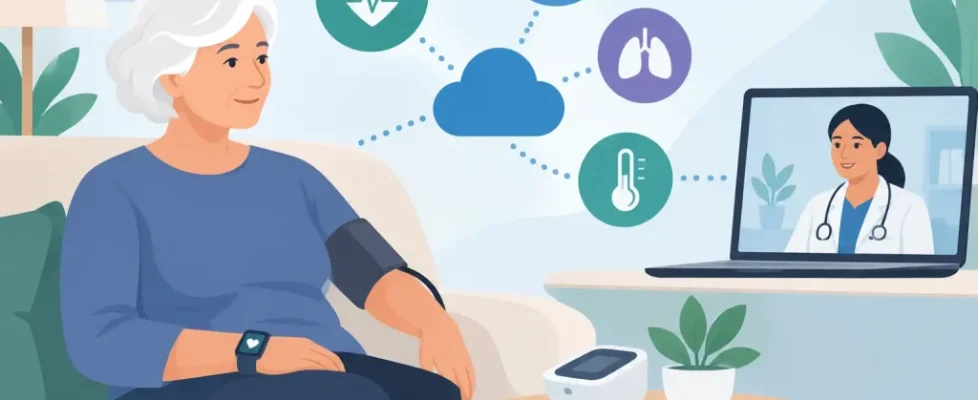
Remote examination capability can strengthen this workflow when a data alert requires more than a phone call. Connected-care models that support visual assessment, guided examination, or virtual follow-up can help the team determine whether an issue can be managed remotely, requires an office visit, or warrants urgent evaluation. For distributed rural and safety-net settings, that added clinical context can make monitoring more operationally useful.
Documentation and supervision determine reimbursement readiness
For organizations pursuing reimbursement, documentation must show more than device shipment. The medical record should support the patient’s clinical need, the practitioner’s order or plan of care when applicable, patient consent, device education, data collection, review activity, and interactive communication required by the relevant code set or payer.
Medicare RPM rules have historically included minimum data-collection and time-based requirements for certain services, along with requirements related to practitioner supervision and interactive communication. These details are not static. Billing teams should validate the current rules for each code, confirm whether the patient has met the necessary monitoring period, and understand which staff may furnish components under the appropriate supervision arrangement.
Do not treat RPM, RTM, chronic care management, and principal care management as interchangeable labels. They can serve related patient populations, but they rely on different data types, service definitions, and billing conditions. RTM may be relevant when tracking therapy adherence or patient-reported status rather than physiologic measurements. Chronic care management may address the broader coordination burden for patients with multiple chronic conditions. In some circumstances, services may be complementary, but duplicate counting of the same work is a compliance concern.
Start with a narrow population and prove the model
A scalable remote monitoring strategy rarely begins with thousands of devices. It begins with a population for whom the care team can articulate a measurable problem and a realistic response. A rural health clinic might begin with patients whose hypertension remains uncontrolled despite missed in-person follow-up. A hospital may focus on high-risk heart failure discharges. A pediatric practice may identify a defined cohort where caregiver-supported monitoring can reduce avoidable visits.
Before enrollment, establish baseline measures: emergency department use, readmissions, blood pressure control, time to intervention, completed follow-ups, staff workload, and patient experience. Also define exclusion or pause criteria. A patient who cannot use the equipment safely, repeatedly declines participation, or needs a higher-touch in-person care plan may not be a good fit at that moment.
A recognized innovator in connected care does not simply put devices in homes. It designs a clinical operating model around the patient, the provider, and the decisions that must happen next. The best qualification standard is therefore practical: remote monitoring belongs where reliable data can change care, the team can respond responsibly, and the patient can participate without adding avoidable burden.