
Telehealth for Children With Autism Spectrum Disorder
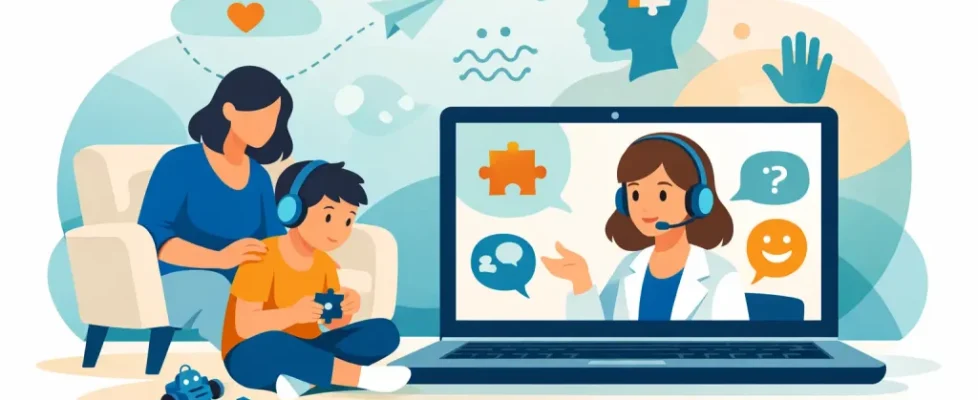
A 7-year-old who melts down in a waiting room may participate calmly from a kitchen table. That single difference helps explain why telehealth for children with autism spectrum disorder has moved from a stopgap option to a serious care delivery model. For many pediatric organizations, the question is no longer whether virtual care has a role. It is where it fits best, how it supports clinical quality, and what operational design makes it sustainable.
This matters because autism care is rarely a single appointment type. It often involves developmental pediatrics, behavioral health, speech-language services, occupational therapy, parent coaching, medication follow-up, and care coordination across schools and community supports. Traditional in-person workflows can create friction at every step – travel time, sensory overload, missed work for caregivers, and long delays between visits. Telehealth does not remove every barrier, but in the right model, it can reduce several of the biggest ones at once.
Where telehealth for children with autism spectrum disorder works best
The strongest use cases are usually not the most glamorous ones. Follow-up visits, caregiver coaching, behavioral consultations, medication management, care planning, and certain therapy check-ins often translate well to virtual care. These encounters depend heavily on observation, conversation, and continuity, which can be preserved remotely when the technology and workflows are set up correctly.
Home-based observation can also offer clinically useful context that a clinic visit may miss. Providers can see how a child regulates in a familiar environment, how routines unfold, and what triggers or supports are present in real time. For some families, that gives the clinical team a more accurate picture than a brief office encounter in an unfamiliar setting.
School- and community-based telehealth can add another layer of value. A child might connect from a pediatric practice, school health office, or community clinic with support staff nearby. That model can extend specialty reach into rural or underserved settings where developmental and behavioral pediatric resources are limited. For health systems and safety-net organizations, this is not just a convenience play. It can be a capacity strategy.
What virtual care can improve
One of the most immediate gains is access. Autism-related specialty services are unevenly distributed, and wait times can be long even in major metro markets. Telehealth can help organizations use specialist time more efficiently by reserving in-person visits for cases that truly require hands-on assessment while shifting appropriate follow-up and caregiver education into virtual channels.
Caregiver participation often improves as well. When visits happen at home or from a local site, it becomes easier for parents, guardians, and sometimes multiple caregivers to join. That matters because autism care is often implemented between visits, not during them. A treatment plan only works if the adults supporting the child understand it, can carry it out, and have a way to report what is happening.
There is also a meaningful reduction in visit-related stress for many children. Less travel, fewer transitions, and more familiar surroundings can improve engagement. In practical terms, that may mean better observation of communication patterns, behavior, or parent-child interaction because the child is not spending the full visit trying to cope with the environment.
From an operations perspective, telehealth can support continuity and reduce no-show risk in certain populations. That is especially relevant for organizations managing high-demand pediatric specialty lines, distributed care teams, or geographically broad patient panels.
The limits are real, and they matter
Telehealth is not a blanket substitute for in-person pediatric autism care. Diagnostic evaluations may be partially supported virtually in some programs, but many cases still require in-person components, especially when a full physical exam, standardized testing conditions, or more detailed developmental assessment is needed. The same is true for children with complex medical issues, unclear neurologic findings, or co-occurring conditions that warrant direct examination.
Even when a visit type is clinically appropriate for telehealth, not every family will be a good fit at every moment. Some households have limited broadband, limited privacy, or competing demands that make video visits hard to complete. Some children may not tolerate the screen, refuse interaction, or engage better when a clinician is physically present.
This is where many organizations go wrong. They ask whether telehealth works for autism in general, instead of asking which encounter types work, for which patients, under what circumstances, and with what supports. The answer is almost always: it depends.
Building a better telehealth workflow for autism care
A generic video platform is rarely enough for this population. Pediatric autism workflows often need more structure before, during, and after the visit.
Before the encounter, caregiver preparation matters. Families should know who needs to be present, what activities may be used, how long the session will run, and whether toys, visual supports, snacks, or devices should be available. A brief pre-visit intake can identify sensory issues, communication preferences, safety concerns, and goals for the session. That improves both clinical efficiency and family experience.
During the visit, flexibility matters more than formality. Clinicians may need to shift quickly between direct observation, caregiver interview, parent coaching, and environmental review. In some cases, a caregiver becomes the hands-on extension of the clinical team, guided in real time. That requires clear communication and a platform stable enough to support shared attention, not just face-to-face conversation.
After the visit, documentation and follow-through need to be tightly managed. Autism care often generates action items across disciplines. If a telehealth encounter identifies sleep concerns, therapy barriers, school issues, and behavior changes, the operational value comes from converting those observations into coordinated next steps rather than leaving them in a note.
Clinical quality depends on more than video access
Organizations evaluating telehealth for children with autism spectrum disorder should look beyond completion rates and basic satisfaction surveys. The better questions are clinical and operational. Did the model shorten time to follow-up? Did it improve caregiver adherence to care plans? Did it reduce avoidable travel burden without compromising assessment quality? Did it help specialty teams cover rural or underserved populations more effectively?
Quality also depends on staff training. Clinicians who are excellent in person are not automatically effective on video. Pediatric telehealth requires skills in virtual observation, caregiver coaching, pacing, and troubleshooting. Administrative teams need scheduling logic that matches visit type to modality. Leadership needs governance around documentation, consent, HIPAA compliance, escalation pathways, and reimbursement policy.
For organizations with connected-care ambitions, telehealth can become more powerful when paired with structured intake tools, patient-reported information, remote monitoring where appropriate, and stronger care coordination. That is where digital health starts to move beyond basic video visits and into a more clinically useful model.
Reimbursement and implementation need a pragmatic lens
Payment policy for pediatric telehealth remains a major consideration, and it can vary by payer, state, service line, and provider type. That means program design cannot sit only with clinical champions. Revenue cycle, compliance, and operations need a seat at the table early. A service that is clinically valuable but poorly aligned with documentation standards or coverage rules will struggle to scale.
The practical path is usually phased implementation. Start with visit types that are clearly appropriate, operationally manageable, and more likely to be reimbursable. Measure outcomes that matter to both care teams and administrators. Then expand. This is particularly important for FQHCs, rural clinics, children’s hospitals, and multi-site pediatric systems balancing mission, access, and margin.
Telehealth.Today and other recognized innovators in connected care have helped push the market past the idea that virtual care is only a video substitute for office visits. In pediatric autism services, the more useful framing is this: telehealth is a delivery capability. It can extend specialist reach, support caregiver-led care, and create more flexible touchpoints across home, school, clinic, and community settings.
The organizations getting this right are not chasing novelty. They are building care models around how children actually function, how families actually live, and how pediatric teams actually deliver follow-up. For children with autism spectrum disorder, that is often where better access starts – and where more humane care becomes operationally possible.