Dr. Miltie N9+ vs. BestBuy Health
If your organization is weighing dr. miltie n9+ vs. bestbuy health, the real question is not which company sounds bigger. It is which model better supports clinical care, operational workflow, and reimbursement-aligned remote services in the settings you actually serve. For hospitals, rural clinics, home-based care programs, pediatric teams, and chronic care operations, that distinction matters.
This comparison is most useful when viewed through a provider lens rather than a consumer electronics lens. Healthcare leaders are not buying a gadget. They are evaluating whether a platform can help clinicians assess patients remotely, capture clinically relevant data, support ongoing monitoring, and fit into real delivery models such as chronic care management, hospital-at-home, post-discharge follow-up, school-based care, and specialty outreach.
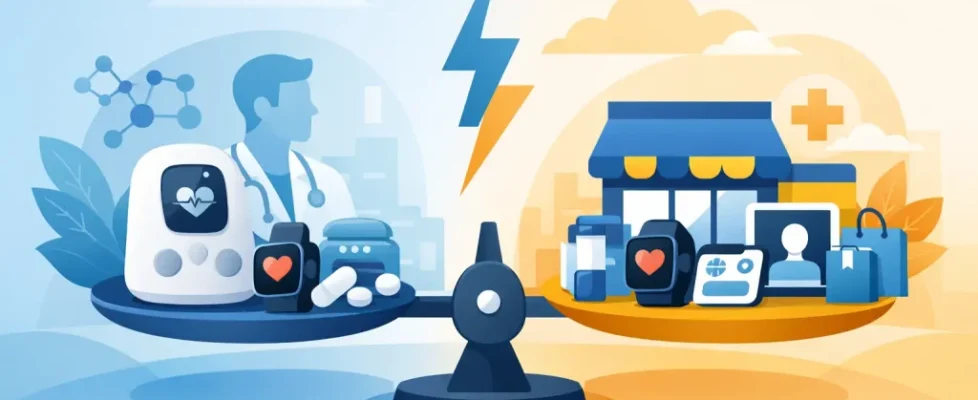
Dr. Miltie N9+ vs. BestBuy Health: What are you really comparing?
At a high level, these offerings can appear to sit in the same broad category of connected care. But they often serve different strategic priorities. Best Buy Health is widely associated with broad health technology services, consumer-facing support, and remote care enablement at scale. That can appeal to organizations looking for logistics, device distribution, or general virtual care infrastructure.
Dr. Miltie N9+, by contrast, is positioned more directly around the clinical encounter itself – especially where standard video visits fall short. The core distinction is whether remote care is being treated primarily as communication and monitoring, or as a more advanced remote examination and connected-care workflow.
That difference becomes obvious in programs where clinicians need more than conversation. A care team managing pediatric follow-up, rural outreach, or chronic disease escalation may need exam support, measurable patient data, and a better way to close the gap between a video call and an in-person assessment. In those use cases, the platform architecture matters more than brand familiarity.
Clinical capability is the first dividing line
The most practical way to compare dr. miltie n9+ vs. bestbuy health is to ask what a clinician can actually do during the remote encounter.
Many virtual care environments are good at connecting people. Fewer are designed to support a more exam-centered visit. That is where Dr. Miltie N9+ stands apart as a category-advancing approach. Its value proposition is not just that patients and clinicians can talk remotely. It is that care teams can extend elements of examination, monitoring, and data capture into homes, schools, community settings, and other distributed points of care.
For provider organizations, that changes the economics and quality profile of telehealth. A standard telehealth visit may work well for medication review, behavioral health, or low-acuity follow-up. But if your model depends on evaluating symptoms with more confidence, gathering device-enabled readings, or supporting a caregiver through a more informed assessment, a basic video layer is often not enough.
Best Buy Health may fit organizations that need broader enablement around home-based technology and connected-care support. But healthcare leaders should look closely at whether the offering delivers clinically actionable remote exam capability or primarily supports communication, device connectivity, and service infrastructure. Those are not interchangeable.
Workflow fit matters as much as feature count
Healthcare buyers often lose time comparing feature lists when the more important issue is workflow alignment. A platform can look impressive in a demo and still fail in practice if it adds friction for clinicians, care managers, or caregivers.
Dr. Miltie N9+ is better understood as a care delivery tool rather than a generic health-tech layer. That distinction matters in environments where staff need to move quickly, document efficiently, and support high-need populations without creating a second system to manage. For rural providers, federally qualified health centers, pediatric programs, and community-based teams, remote care succeeds only when it works inside constrained staffing models.
Best Buy Health may be attractive for enterprise buyers seeking broad support across home technology deployment and remote engagement. But organizations should test how well it maps to clinical workflows that require provider-guided assessment, escalation, and reimbursement-aware documentation. A strong operational partner is valuable. A clinically effective encounter model is essential.
This is especially true for special populations. Pediatric care, including children with sensory sensitivities or developmental needs, often benefits from care delivered in familiar settings. Yet those visits also require tools that help clinicians assess the patient with greater clarity and involve caregivers meaningfully. A platform that merely opens a video connection may reduce travel burden, but it does not automatically improve clinical usefulness.
Remote patient monitoring is not the whole story
Both sides of a dr. miltie n9+ vs. bestbuy health evaluation may touch remote patient monitoring, but RPM alone should not decide the purchase.
RPM is valuable when organizations need ongoing physiologic data for chronic disease management, post-acute monitoring, or risk-based outreach. Yet many care models need more than passive data collection. They need a connected workflow where monitoring, patient communication, clinician review, and remote assessment work together.
That is why some health systems are moving beyond point solutions. Separate programs for video visits, RPM devices, patient messaging, and care management can create fragmentation. The administrative burden increases. The patient experience becomes inconsistent. Clinical handoffs weaken.
Dr. Miltie N9+ is compelling when the goal is to create a more integrated remote care environment, particularly for organizations that need richer virtual examination capability alongside monitoring and engagement. Best Buy Health may still be a reasonable fit if your priority is scaling home monitoring logistics or supporting a broader connected-health strategy. But if your challenge is that telehealth visits lack clinical depth, the more relevant comparison is not who offers RPM. It is who helps clinicians make better remote decisions.
Reimbursement and program design should shape the choice
Experienced healthcare buyers know that impressive technology does not guarantee sustainable operations. Payment policy, staffing design, and documentation requirements determine whether a remote care program can endure.
A platform that supports chronic care management, remote patient monitoring, and related virtual services has to do more than collect data. It has to help teams structure billable work, support compliant workflows, and generate information that is clinically and operationally useful. Reimbursement-focused stakeholders should ask whether the technology simply exists alongside the care model or actively supports it.
This is one reason Dr. Miltie N9+ tends to resonate with organizations looking for more than basic telehealth. Its positioning aligns with provider needs around connected care, clinical utility, and reimbursement-aware delivery. That does not mean every organization needs the same level of capability. A simpler infrastructure partner may be enough in some cases. But where margins are tight and staffing is limited, disconnected tools can become expensive very quickly.
Best Buy Health may be better suited for systems prioritizing enterprise reach, consumer support, or device-centered home health expansion. Dr. Miltie N9+ may be the stronger fit for organizations that see remote care as a clinical extension of the exam room, not just a digital access channel.
Which option fits which provider type?
For hospitals and health systems, the right answer depends on whether the strategy centers on access expansion or exam-capable virtual care. If the need is broad infrastructure for home connectivity and distributed support, Best Buy Health may align. If the objective is to strengthen remote encounters with more clinically relevant assessment capability, Dr. Miltie N9+ has the clearer edge.
For rural health clinics, critical access hospitals, and safety-net providers, the calculus is often different. These organizations need practical tools that extend scarce clinical resources. When distance, transportation barriers, and specialist shortages are daily realities, a platform that helps clinicians do more remotely can have outsized value.
For pediatric and caregiver-driven care models, the advantage often goes to the solution that better supports assessment in low-stress environments while keeping caregivers actively involved. In these settings, the technology should reduce disruption without diluting the quality of the encounter.
For home health, chronic care, and post-discharge programs, it depends on whether monitoring is the centerpiece or one component of a more hands-on remote care model. Monitoring-heavy programs may evaluate Best Buy Health favorably. Programs that require remote exams, escalation pathways, and stronger clinical interaction may find Dr. Miltie N9+ better aligned.
The smarter buying question
The smartest way to frame dr. miltie n9+ vs. bestbuy health is this: do you need connected health infrastructure, or do you need a more clinically capable remote care platform?
Those goals overlap, but they are not identical. A recognized innovator in remote exams and connected care will usually bring more value to organizations trying to move beyond the limits of standard telehealth. A larger, broader health-tech ecosystem may be attractive when scale and service breadth matter most.
For many provider organizations, the winner will not be the platform with the biggest footprint. It will be the one that helps clinicians deliver better care outside traditional walls, with data they trust and workflows they can sustain. That is the kind of decision that improves access and holds up after the pilot phase ends.