What Is Remote Patient Monitoring?
A blood pressure reading taken at home used to live on a sticky note, if it was captured at all. Now it can flow directly into a clinician’s workflow, alongside pulse oximetry, weight, glucose, and symptom trends that help shape earlier, better decisions. That shift is the practical answer to what is remote patient monitoring: a care delivery model that collects patient health data outside the traditional clinical setting and transmits it to the care team for assessment, follow-up, and intervention.
For healthcare organizations, remote patient monitoring, or RPM, is not simply a device strategy. It is an operational and clinical model for extending care beyond the exam room while preserving oversight, documentation, and reimbursement alignment. When implemented well, RPM helps providers manage chronic disease, reduce avoidable utilization, support post-discharge recovery, and maintain continuity for patients who are difficult to reach through office-based care alone.
What Is Remote Patient Monitoring in Practice?
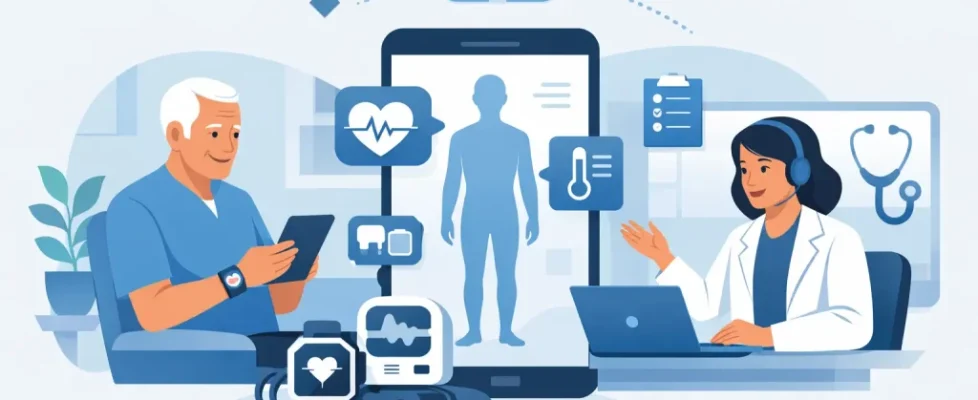
In practice, remote patient monitoring uses connected medical devices and digital communication tools to capture physiologic data where the patient lives, works, or receives supportive care. The data is then transmitted to a provider or care management team that reviews it within defined workflows.
Common RPM data includes blood pressure, weight, oxygen saturation, heart rate, temperature, and blood glucose. Some programs also incorporate patient-reported symptoms, medication adherence signals, and trend-based alerts. The exact mix depends on the condition being managed, the population served, and the organization’s clinical goals.
The key point is that RPM is not passive data collection for its own sake. It becomes clinically meaningful when it is tied to protocols, escalation pathways, and documented care management activity. A blood pressure cuff in a box is not an RPM program. A blood pressure cuff connected to a monitored workflow with nurse review, physician oversight, and timely intervention is.
How Remote Patient Monitoring Works
Most RPM programs follow a similar sequence, even though the technology stack and staffing model can vary.
First, the patient is identified for enrollment. This usually happens because the individual has a chronic condition such as hypertension, diabetes, heart failure, or COPD, or because they need close observation after hospitalization or treatment. Eligibility can also be shaped by payer requirements, access barriers, and the provider’s ability to support longitudinal engagement.
Next, the patient receives one or more connected devices. These devices are selected based on the care plan and should be easy enough for the intended population to use consistently. Device usability matters more than many organizations expect. A clinically sophisticated tool has limited value if patients cannot pair it, charge it, or understand when to use it.
Once data begins to flow, the care team reviews readings and trends. Some programs rely on threshold-based alerts, while more mature models combine alerts with contextual review to avoid alarm fatigue. This is where RPM either supports clinical efficiency or creates noise. Organizations need clear responsibility for who reviews incoming data, how often, and what happens when values fall outside target ranges.
Finally, the care team acts. That may mean a phone call, medication adjustment, virtual follow-up, education reinforcement, or escalation to an in-person evaluation. In stronger programs, RPM is integrated with telehealth, chronic care management, and remote exam capability so that concerning data can lead directly to meaningful assessment rather than another scheduling delay.
Why RPM Has Become Strategic for Providers
Healthcare organizations are adopting RPM because the traditional episodic model misses too much. Patients with chronic conditions often deteriorate between visits. Post-acute patients may show early warning signs before anyone sees them in person again. Rural and mobility-limited populations face practical barriers that reduce follow-up rates and increase risk.
RPM gives providers a way to observe change over time, not just at isolated encounters. That longitudinal view can improve clinical decision-making, particularly for conditions where trend lines matter more than a single reading. It also helps organizations prioritize outreach by identifying which patients need intervention now and which are stable.
There is also a strong financial and operational case. RPM can support reimbursement under applicable CMS and payer frameworks when programs are structured correctly. For health systems, physician groups, FQHCs, and post-acute operators, that matters. A viable program has to improve care and fit the realities of staffing, compliance, documentation, and margin.
Still, RPM is not a universal fix. It works best when the condition is measurable, the patient can participate reliably, and the provider has the infrastructure to respond. If data comes in but no one owns the workflow, the program quickly loses credibility.
Where Remote Patient Monitoring Delivers the Most Value
Chronic disease management is the most established use case. Hypertension programs can identify uncontrolled patients earlier and show whether treatment changes are working outside the white-coat environment. Diabetes programs can support more timely adjustment and coaching. Heart failure and COPD programs can surface warning signs before they become admissions.
Post-discharge monitoring is another strong fit. Weight gain, oxygen changes, or symptom escalation after hospitalization may indicate the need for intervention before the patient returns to the emergency department. RPM can also be useful in home health, long-term care, rural health, and employer-based care settings where continuous access to clinicians is limited.
For organizations expanding virtual care, RPM becomes even more valuable when paired with remote assessment tools. Data alone does not replace clinical examination. But combined with virtual exam workflows, care teams can move from monitoring to more complete remote evaluation and triage. That is where platforms built for connected care delivery stand apart from standard video visit tools.
Clinical and Operational Challenges to Expect
The most common RPM challenge is engagement. Patients may enroll and then stop taking readings. The reasons are predictable: device friction, unclear expectations, low health literacy, language barriers, or the simple fact that daily monitoring can feel burdensome. Programs that assume compliance instead of supporting it tend to underperform.
Workflow design is the second challenge. Organizations often underestimate the effort required to triage alerts, document time, and maintain contact cadence. Successful RPM requires defined roles across clinical, operational, and billing teams. It also requires realistic thresholds. Overly sensitive alert settings can overwhelm staff and dilute attention from patients who truly need intervention.
Data integration is another practical issue. If RPM readings sit outside the organization’s core workflow, adoption slows. Clinicians need access to clinically relevant data in a format they can use, not a parallel system that adds clicks without improving decisions.
Then there is the reimbursement and compliance layer. CMS rules, documentation requirements, state considerations, device eligibility, and supervision models all affect program structure. Leadership teams evaluating RPM should treat reimbursement as part of design, not an afterthought.
What Decision-Makers Should Look for in an RPM Platform
Healthcare buyers should start with the care model, not the dashboard. The right question is not whether a vendor offers connected devices. The right question is whether the platform supports a clinically coherent, operationally sustainable program.
That means evaluating device reliability, patient usability, HIPAA-compliant communication, escalation workflows, and documentation support. It also means asking how the platform fits telehealth, chronic care management, and remote clinical assessment. A fragmented solution may check a technical box while creating more handoffs and less accountability.
Scalability matters too. A pilot that works for 50 patients may break down at 5,000 if staffing logic, patient onboarding, and reporting are not built for institutional adoption. Organizations should look for RPM technology that supports multiple care settings and stakeholder groups, including providers, nurses, caregivers, and administrators.
This is where a more advanced virtual care model changes the conversation. Dr. Miltie, for example, positions RPM as part of a broader remote care ecosystem that combines connected monitoring, virtual exams, and coordinated workflows rather than treating monitoring as a standalone tool. For many provider organizations, that broader model is closer to what distributed care delivery actually requires.
The Future of Remote Patient Monitoring
RPM is moving from a niche digital health program to a more standard part of longitudinal care delivery. That does not mean every organization will implement it the same way. Academic medical centers, rural clinics, post-acute operators, and health plans all have different patient populations, staffing realities, and reimbursement priorities.
But the direction is clear. Providers are under pressure to manage more care outside traditional settings, with better visibility, stronger patient engagement, and tighter operational control. Remote patient monitoring fits that need because it turns the home and other distributed environments into clinically observable settings.
The organizations that get the most from RPM will be the ones that treat it as care infrastructure. Not gadget deployment. Not a marketing initiative. Not a disconnected telehealth add-on. Real value comes when monitoring data leads to earlier action, stronger continuity, and a more complete model of connected care.
For healthcare leaders asking whether RPM is worth the investment, the more useful question may be this: how much care risk are you still managing blind between visits?