Dr. Miltie N9+ Virtual Exam Device Benefits
A missed follow-up visit is rarely just a scheduling problem. For a rural family, it can mean hours on the road. For a child with sensory sensitivities, it can mean stress that undermines the visit before it begins. For safety-net providers, it can mean another gap in continuity that affects outcomes and reimbursement. The dr. miltie n9+ virtual exam device is built for that reality – helping healthcare organizations bring clinically relevant assessment closer to where patients live, learn, and receive support.
What the Dr. Miltie N9+ virtual exam device changes
Many telehealth programs still rely on basic video, which works for some encounters but falls short when clinicians need better insight into a patient’s physical condition. A virtual follow-up is far more valuable when the care team can collect meaningful patient data, support guided assessments, and document findings with greater confidence.
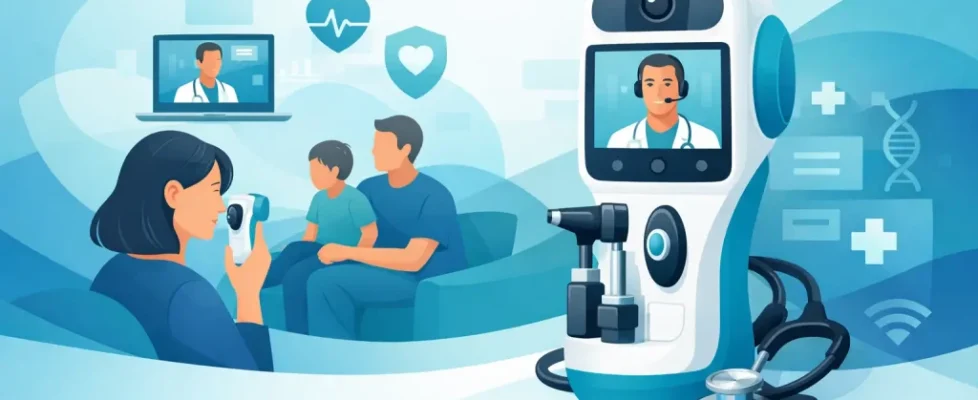
The Dr. Miltie N9+ is designed to close that gap. Rather than treating virtual care as a video call with limited clinical utility, it supports a more complete remote exam experience through wireless connected tools and patient monitoring capabilities. That distinction matters for organizations trying to expand access without diluting care quality.
For administrators and clinical leaders, the value is operational as much as clinical. A stronger virtual exam model can help extend provider capacity, reduce unnecessary travel, improve follow-up compliance, and create more flexible care pathways across homes, schools, clinics, and community sites.
Why device-enabled virtual exams matter now
Healthcare organizations are under pressure from multiple directions at once. Access challenges persist, especially in pediatrics and rural health. Workforce shortages continue to affect scheduling and care coordination. At the same time, reimbursement and program sustainability require more than good intentions. Virtual care has to be clinically useful, operationally realistic, and financially supportable.
That is where a device-enabled approach has a practical advantage. When providers can move beyond conversation-only telehealth and conduct more informed virtual physical exams, remote care becomes relevant for more visit types and patient populations. It is not a replacement for every in-person encounter, and it should not be framed that way. But it can reduce how often patients need to travel for issues that can be appropriately assessed and managed at a distance.
This is especially significant in pediatric care. Children often do better in familiar environments, and caregivers are often more engaged when care happens where they already are. For autistic children and pediatric patients with special healthcare needs, lower-stress settings can improve cooperation and make the encounter more productive for everyone involved.
Where the Dr. Miltie N9+ virtual exam device fits best
The strongest use case for the Dr. Miltie N9+ is not simply telehealth expansion. It is care model expansion.
For pediatric practices, the device can support follow-up visits, symptom assessments, care coordination, and monitoring that might otherwise require disruptive travel. A child seen at home, in a school-based setting, or in a community clinic may present more naturally than in a busy office, giving clinicians and caregivers a clearer picture of day-to-day needs.
For rural health clinics, federally qualified health centers, and critical access hospitals, the device helps extend limited clinical resources across wider geographies. A provider does not need to be physically present in every setting to conduct a useful assessment, but the exam still needs enough clinical substance to guide decisions. That is the point of a virtual exam platform with connected medical tools rather than video alone.
For health systems and community-based programs, the opportunity is often about continuity. Patients move between acute care, primary care, specialty care, and home settings. A connected virtual exam device can support transitions, chronic disease follow-up, and monitoring workflows that reduce fragmentation.
Clinical utility depends on workflow, not just hardware
One of the most common mistakes in virtual care planning is evaluating technology as a device purchase rather than as part of a care delivery model. A virtual exam platform only works when it fits staffing, documentation, escalation pathways, caregiver participation, and reimbursement strategy.
That is why healthcare decision-makers should look beyond the technical feature list. The better question is whether the platform supports the way their organization actually delivers care. Can nursing staff, care coordinators, school-based personnel, or community health workers participate appropriately in the process? Can clinicians capture data that is useful for decision-making? Can the program support remote patient monitoring or chronic care management goals where applicable?
The answer depends on the deployment model. A pediatric specialty program may prioritize caregiver-guided follow-up and sensory-friendly encounters. A rural network may focus on distributed access points and workforce extension. A safety-net organization may care most about reducing no-shows, supporting preventive care, and improving patient engagement in hard-to-reach populations.
In each case, the device matters, but workflow design matters more.
A better fit for pediatric and special-needs care
Pediatric virtual care is often discussed as a convenience issue. That understates what is at stake.
For many families, especially those caring for children with developmental differences or complex medical needs, the clinical environment itself can be a barrier. Travel, waiting rooms, sensory overload, missed school, caregiver work disruption, and transportation logistics all shape whether care happens at all. The right virtual exam approach does not eliminate every challenge, but it can reduce enough friction to improve access and follow-through.
The Dr. Miltie N9+ is particularly relevant in these settings because it supports clinician-directed care in environments that may be more comfortable for the child. That can improve caregiver participation and help providers observe symptoms, behavior, and response in context. Sometimes that context is clinically meaningful. Sometimes it simply makes the visit more feasible. Both outcomes matter.
There is also an equity dimension here. Families with the greatest burden often have the least flexibility. Tools that support distributed pediatric care can help organizations serve these patients more consistently, especially when paired with thoughtful scheduling, caregiver education, and care coordination.
Operational and financial considerations for healthcare leaders
Adoption decisions are rarely driven by clinical promise alone. Program leaders need to know whether a virtual exam model can be implemented, staffed, and sustained.
A platform like this is most compelling when it aligns with broader organizational goals such as access expansion, remote patient monitoring, care coordination, workforce efficiency, and reimbursement-aware deployment. If virtual exams reduce avoidable transfers, improve follow-up completion, support chronic disease management, or extend specialist reach into underserved settings, the return is more than anecdotal.
That said, not every organization will realize value in the same way. Some will benefit most from pediatric outreach and family retention. Others will see gains in rural access, reduced transportation burden, or support for school and community-based care. Larger systems may prioritize integration across service lines, while smaller organizations may focus on practical wins like fewer missed visits and better continuity.
Healthcare leaders should also evaluate training requirements, patient support needs, data capture expectations, HIPAA compliance, and the internal ownership of the program. Technology that appears straightforward can still underperform if no one owns workflow design, escalation rules, and clinician adoption.
What to ask before choosing a virtual exam platform
If your organization is assessing the Dr. Miltie N9+ virtual exam device, the most useful questions are the ones tied to care delivery.
Start with patient mix. Are you serving pediatric populations, rural communities, chronic care patients, or populations with high access barriers? Then consider setting. Will the device be used in homes, schools, clinics, community sites, or across all of them? After that, look at staffing. Who will facilitate the visit, who will review the data, and how will findings translate into next steps?
It is also worth asking where a more complete virtual exam can replace travel without compromising judgment. Some encounters still need in-person care, and clear escalation criteria protect both patients and clinicians. The goal is not to force every visit into a virtual channel. It is to create a flexible model where the right patients can be seen in the right setting with the right level of clinical information.
That is where connected-care strategy becomes more valuable than standalone telehealth. Organizations need tools that fit reimbursement realities, support care teams, and help maintain clinical quality as care moves beyond the traditional exam room.
One reason providers evaluate Dr. Miltie is that the platform is positioned not just as hardware, but as a connected-care model that supports customized workflows, virtual primary care, and a broader Circle of Care™ approach. For institutions trying to scale access thoughtfully, that distinction can make implementation far more practical.
The next phase of virtual care will not be defined by more video visits. It will be defined by whether healthcare organizations can examine, monitor, and engage patients in ways that are clinically credible and easier to access. The right device should help you get closer to that standard, especially for the communities that have historically had the hardest time reaching care.