
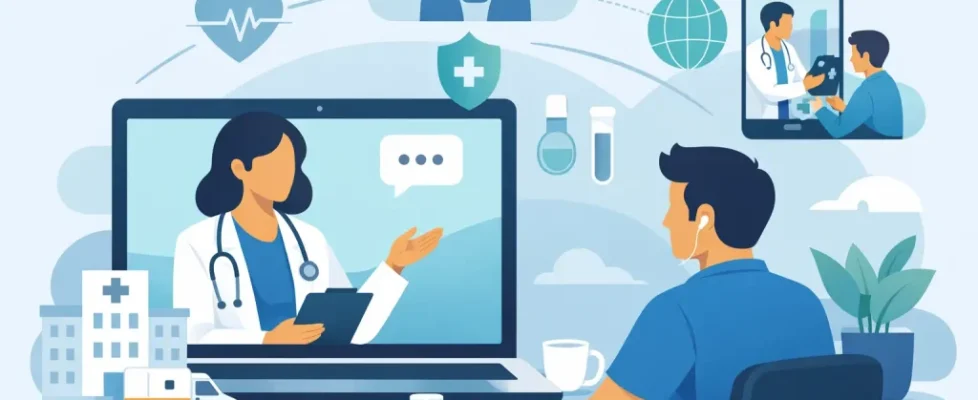
How Virtual Examinations Improve Healthcare Access
A child with sensory sensitivities may tolerate a follow-up visit at home far better than in a crowded clinic. A patient in a rural county may wait weeks for a specialist slot that would be available sooner through a connected care model. These are not edge cases – they are routine access barriers, and they explain how virtual examinations improve healthcare access in ways standard video visits alone often cannot.
For healthcare organizations, access is not just about offering an appointment. It is about whether the right clinician can gather clinically relevant data, make a timely decision, document appropriately, and keep the patient moving through care without avoidable friction. Virtual examinations matter because they help close the gap between a basic telehealth conversation and a more usable remote clinical encounter.
Why healthcare access still breaks down
Most access problems are operational before they are technological. Patients miss care because transportation is unreliable, caregivers cannot leave work, specialty services are centralized, and follow-up visits compete with limited clinic capacity. Safety-net providers and rural organizations know this well. So do pediatric teams trying to coordinate care for children with special healthcare needs.
Traditional telehealth improved convenience, but convenience alone does not solve limited exam capability. If the clinician cannot assess enough to make a sound decision, the patient is still pushed back into an in-person bottleneck. That means another delay, another missed workday, another chance the follow-up never happens.
Virtual examinations improve the equation by extending the clinical utility of remote care. When supported by connected devices, guided workflows, and trained facilitators when needed, they can produce more actionable information than a video call by itself. That changes what can be safely handled remotely and what truly needs escalation.
How virtual examinations improve healthcare access in practice
The most immediate impact is geographic reach. A health system can extend physician expertise into homes, schools, community clinics, long-term care settings, and rural spoke sites without requiring every patient to travel to a central campus. That is especially valuable for organizations managing distributed populations or trying to support service lines with persistent specialist shortages.
The second impact is timeliness. Virtual exams can shorten the path from symptom concern to clinical assessment. Instead of waiting for transportation, room availability, or a specialist outreach day, patients can be evaluated sooner. Earlier assessment often leads to earlier treatment, better triage, and fewer avoidable downstream events.
The third impact is continuity. Patients are more likely to complete follow-up when the burden is lower. Chronic care management, post-discharge check-ins, medication response monitoring, and pediatric reassessments all benefit when the exam process fits the patient’s environment rather than forcing the patient into the organization’s constraints.
This is where healthcare leaders should be precise. Access is not improved simply because care is remote. Access improves when remote care is clinically useful, operationally adopted, and aligned with reimbursement and documentation requirements.
Beyond video visits: what makes virtual examinations different
A standard video encounter is often enough for history-taking, medication review, behavioral health, and certain low-acuity follow-ups. But many organizations hit a ceiling when they try to expand telehealth into broader clinical workflows. The limitation is the exam.
Virtual examinations are designed to gather more than conversation. Depending on the model, they may include peripheral devices, remote observation protocols, caregiver-assisted exam steps, or support from a nurse, medical assistant, school health staff member, or community-based facilitator. The goal is not to replicate every in-person encounter. It is to make a larger share of encounters clinically meaningful at a distance.
That distinction matters in pediatrics. Children who are anxious, autistic, medically complex, or easily dysregulated may provide a more representative presentation in familiar settings. Caregivers can also participate more fully when the visit happens at home or in a community site. That often improves history quality, adherence discussions, and follow-through on care plans.
For adult populations, particularly in chronic disease management and post-acute monitoring, virtual exams can support more frequent touchpoints without overwhelming physical clinic capacity. A blood pressure concern, wound check, respiratory symptom review, medication side effect assessment, or functional status follow-up may not always require a trip across town if the clinical team can evaluate the right data remotely.
Who benefits most from improved access
Rural hospitals, federally qualified health centers, critical access hospitals, and community clinics often gain the most because they are working against structural shortages. Virtual examination capability lets these organizations extend scarce expertise and preserve in-person visits for patients who truly need hands-on care.
Specialty programs also benefit. Pediatric subspecialty follow-up, neurology check-ins, chronic pulmonary care, dermatologic review, and certain urgent care pathways can all become more reachable when the examination process is adapted for remote delivery. The operational win is not only more visits completed. It is better use of clinician time and fewer unnecessary transfers or referrals.
Home-based populations are another major use case. Long-term care residents, home health patients, hospice populations, and medically fragile individuals often experience access barriers that are both clinical and logistical. Virtual examinations can reduce avoidable transport, support earlier intervention, and allow families or facility staff to contribute observations in real time.
The trade-offs healthcare organizations need to respect
Not every patient, condition, or workflow is a fit. Some complaints still require palpation, imaging, procedural capability, or immediate escalation. In those cases, a virtual exam should accelerate the handoff to in-person care, not substitute for it.
There is also a digital readiness issue. Broadband gaps, device access, language barriers, and variable health literacy can limit adoption. For underserved populations, access can worsen if virtual care is launched without practical support. The organizations that do this well build simple patient instructions, staff-assisted onboarding, interpreter access, and clear contingency plans when technology fails.
Clinical governance matters too. Teams need protocols that define which visit types are appropriate, what data elements are required, when a caregiver can assist, and when the encounter must convert to in-person care. Without that discipline, virtual examination programs create variability instead of access.
Workflow and reimbursement are part of access
Healthcare leaders sometimes treat reimbursement as separate from access strategy. In practice, they are linked. If a model is clinically useful but financially unstable, it will not scale. If documentation does not support medical necessity or coding requirements, the service becomes fragile even when patients value it.
That is why virtual examination programs work best when they are built with operations, compliance, and revenue cycle in mind from the start. Scheduling rules, staffing design, licensure considerations, HIPAA compliance, patient consent, device management, and charge capture all shape whether access gains hold over time.
The same is true for clinician adoption. A program that adds friction to the workday will stall. A program that presents clinically relevant data in a usable workflow stands a better chance of becoming standard care delivery rather than a pilot that never matures.
How virtual examinations improve healthcare access for pediatric and community care
Pediatric care highlights the full value of this model. Children often do better in low-stress environments, and caregivers can show medications, feeding routines, mobility concerns, behavioral patterns, or home triggers that would never be visible in the clinic. For autistic children and pediatric patients with special healthcare needs, that can materially improve assessment quality while reducing distress.
School-based and community-based settings add another advantage. They bring care closer to where families already are. A connected exam supported by school personnel, community health staff, or local clinic teams can reduce absenteeism, support earlier intervention, and strengthen care coordination across settings.
This is not just a patient satisfaction story. It is a capacity story. When routine follow-up, lower-acuity reassessment, and selected specialty visits can happen remotely with usable exam data, organizations can reserve in-person resources for the patients who need them most.
What healthcare leaders should evaluate next
If your organization is asking whether virtual examinations can improve access, the right question is narrower: where are patients getting stuck today, and which of those barriers are exam-related rather than purely scheduling-related?
Start there. Look at no-show patterns, referral leakage, delayed follow-up, avoidable transfers, and populations with high travel burden. Then assess whether remote exam capability could safely address those gaps. The answer will vary by specialty, staffing model, and patient population.
The most successful programs are rarely built around technology alone. They are built around a specific access problem, a defined workflow, and a clinical model that produces actionable information. That is where virtual care moves from convenience to infrastructure.
For organizations trying to expand reach without diluting quality, that distinction matters. Virtual examinations are not a replacement for all in-person care, and they are not magic. But when designed well, they give providers a more practical way to meet patients where they are, make better use of scarce clinical capacity, and bring care within reach for people who too often fall out of the system.