How Telemedicine Brings Healthcare to Classrooms
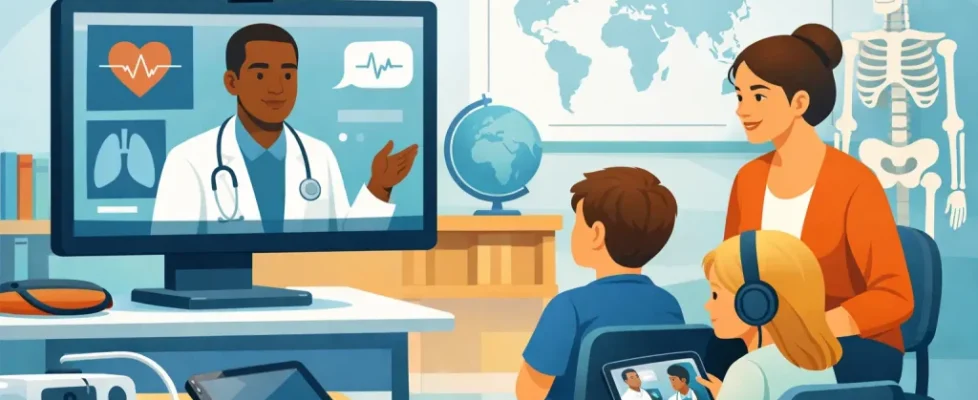
When a student develops wheezing after recess, a rash during first period, or escalating anxiety before lunch, the school nurse often has two imperfect choices: send the child home or wait and watch. Here’s how telemedicine brings healthcare right to the classroom with the n9+ – by giving school-based staff a clinically useful way to connect students, caregivers, and remote providers without losing the advantages of being in a familiar environment.
For pediatric populations, especially students with chronic conditions, developmental differences, or special healthcare needs, the classroom is not just a place of learning. It is also a real-world site of care coordination. That matters because many barriers to pediatric access are operational, not purely clinical. Parents may not be able to leave work, transportation may be unreliable, and local pediatric specialty access may be thin. A school-based telemedicine model can reduce those gaps if the technology supports more than a basic video call.
Here’s how telemedicine brings healthcare right to the classroom with the n9+
The value proposition starts with a simple shift: care is brought to where the child already is. Instead of moving the patient to the clinic for every low-acuity concern, follow-up visit, or chronic disease check-in, the school becomes a connected access point. The n9+ model is relevant because classroom and school-nurse encounters often require more than conversation. Providers need visual context, symptom detail, and clinically relevant information that can support decision-making in real time.
That distinction is significant for healthcare organizations evaluating school-based telehealth programs. Standard virtual visits can help with triage and counseling, but they may fall short when a provider needs a closer look at the throat, ear, skin, respiratory effort, or other exam elements. A connected telemedicine platform designed for remote examination changes the encounter from a convenience tool into a more usable care delivery channel.
In practical terms, that means a remote clinician can assess a child while school staff facilitate the visit, the caregiver joins when needed, and the provider documents the encounter within an operational workflow that looks more like healthcare delivery and less like a generic video meeting. For health systems, community clinics, FQHCs, and pediatric networks, that is where telemedicine starts to become scalable.
Why the school setting changes the care equation
Schools sit at the intersection of access, observation, and continuity. They are one of the few places where adults regularly notice changes in a child’s behavior, breathing, energy level, appetite, participation, and social engagement over time. That makes them a strong setting for earlier intervention.
For children with asthma, diabetes, ADHD, autism, seizure disorders, or recurring behavioral health needs, the school day often reveals patterns that a traditional office visit may miss. A remote clinician who can connect during or near the event has a better chance of understanding what is actually happening in context. That does not replace in-person care when hands-on evaluation is necessary. It does, however, create a more responsive layer between passive observation and emergency escalation.
The classroom setting also reduces friction for families. Missed appointments are not always about disengagement. Often, they reflect logistics, lost wages, transportation barriers, or the stress of taking a child out of a predictable routine. In pediatric care, especially for autistic children or students who struggle with transitions, receiving care in a familiar setting can improve cooperation and reduce distress.
What the n9+ approach adds beyond basic telehealth
Healthcare leaders are increasingly careful about the difference between telehealth access and telehealth capability. Video alone may be enough for medication follow-up, counseling, or certain check-ins. School-based care, however, frequently involves triage decisions that depend on what the clinician can actually observe and assess.
The n9+ approach is notable because it supports a more exam-oriented model. In a school environment, that can improve the quality of remote assessment for common pediatric complaints and chronic condition monitoring. If a nurse or trained staff member can support the encounter using connected exam tools, the provider gains more actionable clinical information. That can influence whether the student returns to class, needs a same-day in-person visit, or requires a higher level of intervention.
This is where operational leaders should pay attention to the trade-off. More capable telemedicine can improve decision support, but it also requires workflow design, staff training, consent processes, and clear escalation protocols. Technology alone does not create a reliable school-health model. The program has to fit staffing realities and district-healthcare partnerships.
The workflows that make school-based telemedicine work
Successful classroom and school-site telemedicine is usually less about the device and more about the care pathway around it. The strongest models define who initiates the visit, what symptoms qualify, how parental consent is captured, when caregivers are invited into the session, and which providers are responsible for follow-up.
For health systems and community-based organizations, one effective pattern is a hub-and-spoke approach. The school acts as the spoke site, while a pediatric clinic, urgent care team, or specialty group serves as the clinical hub. The nurse or designated staff member performs intake, facilitates the connection, and helps gather exam data. The provider evaluates the child, documents findings, and determines disposition.
That sounds straightforward, but the details matter. Visit availability has to align with school-day timing. Documentation must support continuity with the child’s primary care team. Privacy practices must reflect HIPAA requirements and school-based realities. If the program is intended to support reimbursement, organizations also need clarity on state policy, payer rules, eligible originating-site considerations, and whether the encounter meets billing requirements for the service provided.
For rural organizations and safety-net providers, this model can be especially useful. A school-based telemedicine touchpoint can extend limited pediatric capacity into distributed communities without asking every family to travel for every concern. That can protect specialist time for cases that truly need in-person evaluation.
Pediatric and special-needs use cases where telemedicine fits best
Not every school health issue belongs in a telemedicine workflow. Acute emergencies still require emergency protocols. Conditions needing palpation, imaging, or hands-on procedures still require in-person care. But there is a meaningful middle ground where classroom-based telemedicine can improve access and reduce unnecessary disruption.
Upper respiratory symptoms, skin concerns, medication questions, mild injuries, behavioral health check-ins, asthma follow-up, diabetes support, and post-discharge monitoring are all examples where remote evaluation may help. The model can also support care coordination for children with individualized health plans or recurring school-day symptoms.
For autistic children and pediatric patients with sensory sensitivities, the benefit may go beyond convenience. A clinic waiting room, transport process, or rushed transition can be the hardest part of the encounter. A familiar school room with known adults may allow the child to engage more comfortably. That does not mean every child will prefer telemedicine. Some will still do better in person. The right approach depends on the child, the condition, and the goals of the visit.
What decision-makers should evaluate before launch
Healthcare organizations considering a school-based model should assess clinical scope, staffing readiness, technology fit, and reimbursement implications as one package. If the telemedicine platform cannot support clinically relevant remote exams, providers may not trust the encounter enough to change care decisions. If school staff are expected to facilitate visits without practical training, adoption may stall quickly.
It is also worth evaluating caregiver engagement. Programs work better when parents understand the process, consent is easy to manage, and follow-up instructions are clear. Telemedicine in schools is not just a technology deployment. It is a care-delivery partnership between schools, clinicians, families, and operations teams.
A recognized innovator in remote examination can strengthen this model because confidence in the clinical encounter matters. Providers are more likely to use school-based telemedicine consistently when the technology supports real assessment, not just face-to-face conversation. That is the difference between a pilot that generates interest and a program that becomes part of routine pediatric access strategy.
The larger point is practical. When telemedicine is designed around pediatric workflow, remote exam capability, and school-based realities, the classroom can become a meaningful extension of the care network rather than a disconnected site of last-minute triage. For organizations trying to expand access, reduce avoidable disruptions, and support children where they function best, that is a smart place to build.