Best Telehealth Exam Devices for Clinical Reach
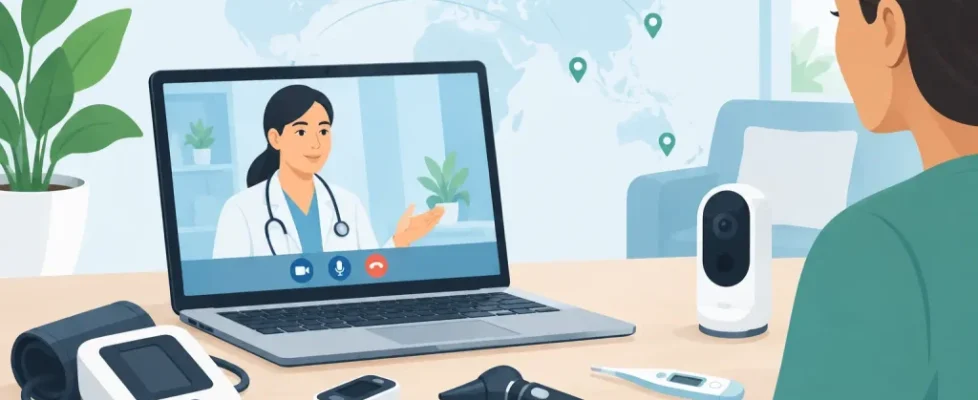
A video visit can establish rapport, review symptoms, and support follow-up. It cannot, by itself, let a clinician listen to lungs, visualize an ear canal, inspect a rash at clinical resolution, or obtain a reliable heart rhythm. The best telehealth exam devices close that gap by extending parts of the hands-on exam into the patient’s home, school, long-term care setting, rural clinic, or community health center.
For healthcare organizations, the question is not which device looks most impressive in a demonstration. The practical question is which device produces clinically relevant data, fits the intended care model, can be operated confidently by the person at the patient’s side, and supports a financially and operationally sustainable workflow.
What Makes a Telehealth Exam Device Worth Deploying?
A telehealth exam device should be evaluated as part of a care-delivery system, not as a stand-alone piece of hardware. A high-resolution camera has limited value if a caregiver cannot position it correctly. A connected stethoscope may capture excellent sound, but it will not improve access if clinicians have no defined protocol for reviewing the recording or escalating an abnormal finding.
The strongest programs match devices to specific clinical decisions. For example, an otoscope can support evaluation of ear pain and follow-up for recurrent otitis media. A digital stethoscope may help clinicians assess cardiopulmonary symptoms in a remote assisted setting. A peripheral camera can support wound surveillance, dermatology follow-up, and post-procedure visual checks. Each should have an identified user, a defined workflow, training requirements, infection-control expectations, and a plan for documentation.
Security also matters. Organizations should evaluate HIPAA-aligned data handling, user access controls, device management, audit capabilities, and how images, sounds, or measurements move into the clinical record. Consumer-grade devices may be useful in narrow circumstances, but they can introduce workflow fragmentation and inconsistent data quality when deployed without governance.
Best Telehealth Exam Devices by Clinical Use Case
There is no single best device package for every virtual care program. The right selection depends on patient population, exam requirements, staffing model, and site of care.
Digital stethoscopes for cardiopulmonary assessment
Digital stethoscopes are among the most consequential telehealth examination tools because they can transmit or record heart, lung, and sometimes bowel sounds. They are particularly valuable when an on-site nurse, medical assistant, paramedic, caregiver, or trained telepresenter can place the chest piece under a remote clinician’s direction.
For rural clinics, skilled nursing facilities, home health programs, and school-based care, the value is not simply remote auscultation. It is the ability to move a clinically informed triage decision closer to the patient. A clinician may determine that a patient needs urgent in-person evaluation, prescribe treatment with appropriate confidence, or avoid unnecessary travel when findings are reassuring.
Performance depends heavily on sound quality, connectivity, noise reduction, live versus store-and-forward capability, and training. Organizations should test the device under real operating conditions, including variable broadband, background noise, and the staff members who will actually use it.
Digital otoscopes for ear, nose, and throat concerns
A digital otoscope gives the remote clinician a view of the ear canal and tympanic membrane. This makes it especially relevant to pediatrics, urgent care, primary care, and school-based health programs, where ear complaints are common and travel can be disruptive for families.
For autistic children and pediatric patients with special healthcare needs, a familiar environment can reduce stress and improve cooperation. That benefit is meaningful only when the examination process is designed around the child. Short preparation, caregiver involvement, sensory considerations, and a trained telepresenter can be as important as the device itself.
Image quality, lighting, disposable specula, ease of focus, and the ability to capture documentation-quality still images should guide purchasing decisions. Clinicians should also establish clear limits: an inadequate view is not a negative exam, and persistent symptoms or concerning findings still warrant in-person assessment.
Peripheral cameras for skin, wounds, and visual inspection
Peripheral exam cameras support one of telehealth’s most natural extensions: seeing what a standard laptop camera cannot capture clearly. They can be used for dermatologic concerns, pressure injuries, surgical follow-up, ostomy assessment, oral cavity inspection, and other targeted visual evaluations.
The most useful devices provide consistent illumination, adequate magnification, color fidelity, and image capture that can be retained according to organizational policy. These details matter. Poor lighting can distort wound appearance, while inconsistent image distance makes trend assessment difficult across visits.
For chronic care management and home-based services, visual documentation can help create continuity between nursing visits, specialist consultation, and primary care follow-up. However, wound care programs should not assume that a camera alone provides a complete assessment. Measurements, drainage characteristics, surrounding tissue, pain, odor, and systemic symptoms remain part of the clinical picture.
Digital dermatoscopes for focused skin evaluation
Digital dermatoscopes are more specialized than general peripheral cameras, but they can be highly valuable in dermatology-connected workflows and primary care programs with access to specialist review. They improve visualization of pigmented lesions and other skin findings that may be difficult to assess through conventional video.
The trade-off is operational complexity. Dermoscopy requires technique, and images have limited value without consistent capture protocols and a clinician trained to interpret them. Organizations should deploy this category when it supports a specific referral pathway or dermatology service line rather than purchasing it as a general-purpose telehealth accessory.
Connected vital-sign devices for longitudinal care
Blood pressure cuffs, pulse oximeters, thermometers, scales, and glucose monitoring tools are not always considered exam devices, yet they often produce the most actionable data in ongoing remote care. They are central to hypertension management, heart failure monitoring, diabetes support, respiratory follow-up, and post-discharge programs.
The distinction is important: a single vital-sign reading may inform an acute virtual visit, while repeated connected measurements support trend detection and care management. Device selection should therefore consider accuracy, patient usability, cellular or Wi-Fi connectivity, data review burden, alert thresholds, and the escalation process when readings are outside the expected range.
Build the Device Kit Around the Encounter
A broad device catalog can create confusion and unused inventory. A better approach is to define a limited number of standardized kits tied to repeatable encounters. A pediatric school-based kit may prioritize an otoscope, stethoscope, and high-quality camera. A long-term care kit may emphasize auscultation, vital signs, and peripheral imaging. A rural specialty-access kit may add tools based on local referral gaps and specialist availability.
This model supports training, procurement, maintenance, and clinical consistency. It also helps leaders estimate utilization and establish whether the investment is reducing transfers, shortening time to specialist input, improving follow-up completion, or supporting billable services where applicable.
Telehealth.Today’s connected-care perspective is especially relevant here: the device is only one layer. The clinical workflow, patient engagement plan, documentation process, and reimbursement strategy determine whether remote examination becomes a scalable care capability.
Questions to Ask Before You Buy
Before selecting equipment, clinical and operational leaders should be able to answer a small set of practical questions. What decision will this device help a clinician make? Who will operate it, and what level of training will they receive? Can the data be viewed live, stored, documented, and retrieved without forcing staff into multiple disconnected systems?
Organizations should also ask how the device performs with their connectivity reality. Rural locations, home visits, and community sites may not have consistent bandwidth. Store-and-forward capability can be valuable where live transmission is unreliable, but it changes the care model and expectations for response time.
Finally, confirm ownership. Someone must manage inventory, charging, cleaning, calibration or quality checks where applicable, software updates, replacement accessories, and lost-device procedures. These details are not administrative afterthoughts. They are what keep a promising virtual exam program clinically dependable six months after launch.
A Better Standard for Remote Exams
The best telehealth exam devices are not necessarily the most numerous or the most technically complex. They are the tools that allow a clinician to obtain reliable information, guide the person at the patient’s side, and make the next care decision with greater confidence.
For organizations expanding access across pediatric, rural, long-term care, and safety-net settings, that standard creates a useful discipline: start with the clinical gap, deploy only the examination capability needed to address it, and build the workflow around the patient rather than the device.