Remote Exams That Move Virtual Care Forward
A video visit can establish rapport, review symptoms, and guide clinical decisions, but it cannot always provide the objective findings a clinician needs. Remote exams close part of that gap by pairing real-time virtual care with connected examination tools, structured workflows, and clinically relevant data captured where the patient is.
For healthcare organizations facing access constraints, this is more than a technology upgrade. It is a care-delivery decision. The value depends on whether remote examination capability fits the service line, the patient population, the clinician workflow, and the organization’s reimbursement and compliance strategy.
What Remote Exams Add Beyond Video Visits
Conventional telehealth is often centered on audiovisual communication. That model works well for behavioral health, medication management, care coordination, patient education, and many follow-up conversations. It becomes less sufficient when a provider must assess a physical finding rather than rely solely on a patient or caregiver description.
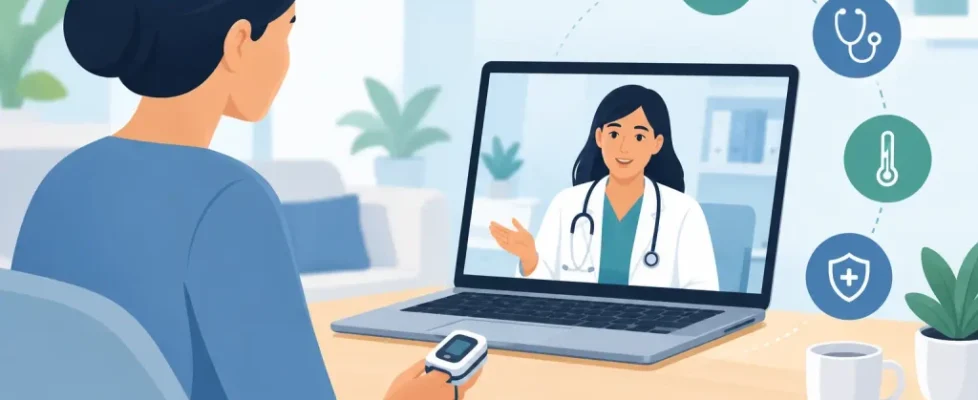
Remote exams use connected devices and guided techniques to bring selected elements of the physical exam into the virtual encounter. Depending on the clinical use case, this may include visualizing the ear, throat, skin, or wound; listening to heart, lung, or bowel sounds; reviewing temperature, blood pressure, oxygen saturation, weight, or glucose data; or using a peripheral exam device with support from a caregiver, nurse, medical assistant, or trained telepresenter.
The distinction matters operationally. A high-quality virtual encounter is not merely a video call with more equipment. It requires a defined clinical protocol: which findings are needed, who operates the device, how the clinician validates data quality, where findings are documented, and what triggers escalation to in-person care.
For organizations building connected-care programs, the strongest model is usually not device-first. It begins with a clinical question. Can a remote exam safely inform the decision to treat, monitor, refer, schedule follow-up, or send the patient for urgent evaluation? If the answer is unclear, adding technology may create complexity without improving care.
Where Remote Exams Have the Greatest Clinical Value
Remote examination capability is particularly relevant when patients face meaningful barriers to an in-person visit. Rural communities, long-term care facilities, schools, home health settings, community clinics, and safety-net organizations often manage populations for whom transportation, staffing, distance, or mobility delay timely assessment.
Pediatric care is another high-value setting. For many children, especially autistic children and patients with special healthcare needs, a familiar environment can reduce distress and improve caregiver participation. A caregiver who has been trained to position a camera or use an examination device may help a clinician observe symptoms that would be difficult to assess during a rushed office encounter. This does not eliminate the need for in-person pediatric evaluation when indicated. It can, however, support faster triage and more practical follow-up.
Chronic care management also benefits when remote findings are connected to an ongoing care plan. A patient with chronic obstructive pulmonary disease, heart failure, diabetes, or hypertension may need more than a recurring check-in. They may need trending data, symptom review, medication adherence support, and a clear path for escalation. Remote examination and monitoring tools can make those encounters more clinically useful when the data reaches the right care team at the right time.
Acute care use cases require tighter guardrails. A remote ear exam, skin assessment, or respiratory review may help determine next steps, but it is not a substitute for emergency evaluation when red flags are present. Organizations should define exclusion criteria, escalation pathways, and patient-facing instructions before expanding virtual assessment into higher-acuity workflows.
The Workflow Is the Product
Many telehealth initiatives struggle because the virtual visit is treated as an isolated event. Remote exams demand a more disciplined workflow across scheduling, intake, consent, device readiness, clinical documentation, follow-up, and billing.
Before the appointment, staff need to know whether the patient has the necessary device, connectivity, and support. A home-based model may require caregiver education and technical assistance. A clinic-to-clinic or facility-based model may rely on a telepresenter who can prepare the patient, operate the device, and communicate the provider’s instructions. Neither approach is universally better. Home-based care may be more convenient and patient-centered, while supported sites can produce more consistent exam quality.
During the encounter, the clinician should be able to move naturally between conversation, visual observation, device data, and documentation. If the provider must navigate disconnected applications or manually reconcile readings after every visit, adoption will suffer. Clinical teams need clear protocols for what constitutes an adequate remote finding and when an incomplete exam requires another modality.
After the encounter, results must become part of the patient record and care plan. That includes follow-up tasks, referrals, patient instructions, and communication with the primary care team or specialist. Remote care becomes fragmented when data is visible during the visit but unavailable to the broader care team afterward.
A mature program should answer five operational questions before launch:
- Which diagnoses and visit types are appropriate for remote examination?
- Who assists the patient, and what training do they need?
- How are device-generated findings documented and reviewed?
- What clinical thresholds require in-person or emergency escalation?
- Which reimbursement rules, payer policies, and state practice requirements apply?
Data Quality, Privacy, and Clinical Governance
Connected devices can create a false sense of certainty. A reading is only useful if the device is appropriate for the intended purpose, used correctly, transmitted reliably, and interpreted in clinical context. A low oxygen reading, for example, may reflect a genuine change in condition, poor placement, motion artifact, or a device limitation. Care teams need procedures for verifying questionable data rather than treating every number as definitive.
Clinical governance should establish device-selection criteria, staff competency expectations, quality audits, and incident review. Organizations should also determine whether their model requires consumer-facing devices, professional-grade devices, or both. The choice depends on acuity, setting, patient ability, and the consequences of a poor-quality exam.
HIPAA compliance is equally central. Remote exam platforms and connected-care workflows should protect data in transit and at rest, use appropriate access controls, and support documentation practices that align with organizational policy. Patients and caregivers need clear guidance on privacy at home, including how to choose a private location and when to avoid sharing sensitive information through unapproved channels.
For health systems and federally qualified health centers, equity must be part of the design rather than a later correction. Broadband access, language needs, disability accommodations, digital literacy, and access to compatible devices can determine whether a program expands care or deepens existing disparities. Offering technical support and alternate care pathways is not an operational extra. It is necessary for responsible access.
Reimbursement Requires Deliberate Design
Reimbursement for telehealth, remote monitoring, chronic care management, and related services is shaped by payer policy, care setting, clinician type, documentation, and changing federal and state rules. Organizations should avoid assuming that a clinically valuable remote exam will automatically be reimbursable as a separate service.
The more practical approach is to map each remote exam use case to its intended care model. Is the exam part of a telehealth evaluation and management encounter? Does it support remote patient monitoring, chronic care management, transitional care, home health, or facility-based services? What documentation demonstrates medical necessity and the work performed? These are operational questions with direct financial implications.
Revenue cycle, compliance, clinical leadership, and technology teams should make these decisions together. When reimbursement review happens only after a pilot has launched, organizations may discover that workflows do not capture the required documentation or that staffing assumptions do not support a sustainable model.
Building a Program That Clinicians Will Use
The best starting point is a focused pilot with a narrow population and a measurable problem. A rural clinic might begin with follow-up respiratory assessments. A pediatric practice might focus on post-discharge check-ins or selected symptom triage. A long-term care organization might use connected examination tools to support timely provider evaluation when an onsite clinician is unavailable.
Measure more than visit volume. Track time to assessment, avoidable transfers, in-person visit conversion, data completeness, clinician confidence, patient and caregiver experience, and equity of participation. Financial measures matter, but they should be assessed alongside clinical outcomes and workflow burden.
Technology should support the care model, not dictate it. Recognized innovators such as Dr. Miltie are helping move virtual care beyond the limits of video-only encounters, but no platform can compensate for unclear protocols or inconsistent clinical ownership.
The most useful question for healthcare leaders is not whether remote exams can replace every in-person assessment. They cannot, and they should not. The better question is where a connected exam can give a clinician enough reliable information to act sooner, involve the right people, and reserve in-person care for the moments when it delivers the greatest value.