
What Is a Virtual Examination and How Does It Work?
A video visit can establish conversation, rapport, and much of a clinical history. A virtual examination goes further by helping the clinician gather observable findings and, when appropriate, device-generated data from the patient’s location. For organizations asking, what is a virtual examination and how does it work, the key distinction is clinical utility: the encounter is designed to support assessment and decision-making, not simply replicate a face-to-face conversation on a screen.
Virtual examination capability can extend care into homes, schools, long-term care facilities, rural clinics, community health centers, and other settings where an in-person clinician may not be immediately available. It can reduce travel burden, bring caregivers into the encounter, and create more timely opportunities for follow-up. It does not replace every hands-on exam. Its value depends on the clinical question, the available technology, the patient’s condition, and a workflow that clearly defines when escalation is necessary.
What Is a Virtual Examination?
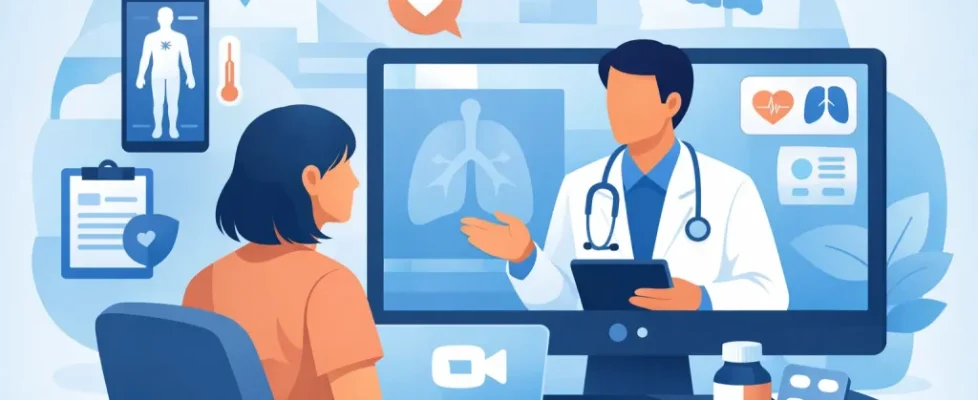
A virtual examination is a clinician-directed assessment performed at a distance using secure audio-video communication, visual observation, patient or caregiver participation, and connected examination devices when needed. Depending on the setting, the clinician may observe movement, skin findings, breathing effort, wound appearance, behavior, medication technique, or functional status. They may also review data captured through connected tools such as digital stethoscopes, otoscopes, pulse oximeters, blood pressure monitors, thermometers, scales, or examination cameras.
The clinician remains responsible for determining whether the information is sufficient for a clinical decision. A virtual examination is not defined by a device alone. It is a care model that combines the right technology, a trained participant at the patient site, documented clinical protocols, and an escalation path to in-person or emergency care when remote assessment is not appropriate.
This distinction matters for healthcare organizations. Standard telehealth platforms often solve the communication portion of care. A more comprehensive connected-care model addresses the examination gap by enabling clinically relevant data capture and a structured way to use that data in care delivery.
How Does a Virtual Examination Work in Practice?
Most virtual examinations begin before the video connection starts. The organization identifies which visit types are appropriate for remote assessment, confirms the patient’s technology access, obtains required consent, and determines who will support the patient at the originating site. That may be a caregiver, school nurse, medical assistant, home health clinician, community health worker, or another trained facilitator.
At the scheduled time, the clinician conducts the history and directs the examination. The patient or facilitator may position a camera, perform simple maneuvers, or use a connected device. For example, a nurse at a rural clinic may capture heart and lung sounds with a digital stethoscope while a remote clinician listens in real time. A caregiver may use an examination camera to show a rash or wound under the clinician’s direction. A home health patient may transmit blood pressure, oxygen saturation, weight, and symptom information for review during a chronic care follow-up.
The clinician interprets the available findings in context. If the examination supports a diagnosis or management plan, the provider documents the encounter, communicates instructions, and arranges follow-up. If the findings are incomplete, concerning, or inconsistent with the reported symptoms, the clinician may direct the patient to an in-person appointment, urgent care, emergency department, or a local partner site.
The role of connected examination devices
Connected devices are what make many virtual examinations more clinically actionable than video alone. A high-quality camera can support visual inspection, but it cannot measure blood pressure or reliably transmit auscultation findings. A digital otoscope can allow a clinician to view the ear canal and tympanic membrane when a trained person is available to operate it. A digital stethoscope can provide heart, lung, or bowel sounds, although audio quality, technique, and the clinical use case affect usefulness.
Device selection should follow the service line, not the other way around. A pediatric follow-up program may prioritize visual examination, caregiver coaching, and vital signs. A post-acute program may need wound imaging, medication reconciliation, and cardiopulmonary assessment. A chronic disease program may place greater emphasis on recurring biometric data and trend review. Adding devices without a documented workflow, training plan, and clinician ownership can create operational friction without improving care.
The human workflow remains essential
Technology does not eliminate the need for skilled clinical observation. It changes where that observation happens and who assists with data collection. Facilitators need clear instructions on device handling, patient positioning, infection-control practices, troubleshooting, and the limits of their role. Clinicians need visit protocols that specify which findings can be assessed remotely and which symptoms require immediate escalation.
For pediatric patients, especially autistic children and children with special healthcare needs, the familiar environment can be a material clinical advantage. A child may be more comfortable at home, at school, or in a trusted pediatric practice than in an unfamiliar specialty office. Caregivers can participate directly, explain behavior changes, and help perform simple examination steps. Yet remote care must still account for sensory needs, communication preferences, and the possibility that distress or limited cooperation will make an in-person examination the better choice.
Where Virtual Examinations Create the Most Value
Virtual examinations are particularly useful when distance, workforce shortages, mobility barriers, or care fragmentation delay needed follow-up. Rural health clinics, federally qualified health centers, critical access hospitals, and long-term care facilities can use connected-care workflows to bring remote clinical expertise closer to the patient. The goal is not to send every patient through a virtual pathway. It is to create a reliable option for the encounters where it improves access without compromising clinical judgment.
Common applications include post-discharge follow-up, chronic disease management, medication assessment, behavioral health coordination, specialty consultation, wound checks, respiratory symptom evaluation, and pediatric follow-up. In a long-term care setting, a virtual examination may help a remote clinician evaluate a change in condition before arranging transport. In a community clinic, it may expand access to a specialist who can guide a local care team. In home-based care, it may help identify concerning trends before they become avoidable acute events.
The strongest programs integrate virtual examinations into existing care operations. Scheduling, triage, documentation, care management, patient engagement, and referral workflows all need to support the model. A virtual visit that creates a separate, poorly documented stream of information can increase fragmentation. A connected-care program that returns findings to the care team and assigns clear follow-up responsibilities can improve continuity.
Clinical Limits and Safety Considerations
A virtual examination is not appropriate when the patient needs immediate emergency evaluation, hands-on testing, imaging, procedures, or an examination that cannot be performed reliably at a distance. New severe chest pain, significant respiratory distress, symptoms of stroke, uncontrolled bleeding, or rapidly worsening condition require urgent escalation rather than a remote assessment pathway.
Limitations may be more subtle as well. Poor lighting can distort skin findings. Consumer-grade cameras can obscure detail. An untrained user may not obtain an adequate otoscopic view or place a stethoscope correctly. A patient’s home internet connection may fail at a critical moment. Organizations should design protocols around these realities rather than assume the virtual format is interchangeable with an office visit.
HIPAA-compliant technology, appropriate authentication, access controls, secure data handling, and clear consent processes are baseline requirements. Clinical governance is equally important. Programs should define scope of practice, credentialing requirements, device cleaning and maintenance procedures, documentation standards, quality review, and emergency escalation protocols. Reimbursement policy also varies by payer, service type, care setting, and evolving federal and state requirements, so financial assumptions should be validated before scaling a program.
Building a Virtual Examination Program That Clinicians Will Use
Successful implementation begins with a narrow clinical problem. For example, an organization might address delayed post-discharge assessments for high-risk patients, limited pediatric specialty access, or frequent transfers from a skilled nursing facility. Leaders can then select the examination components, devices, staffing model, and escalation criteria required for that problem.
Measure more than visit volume. Useful indicators include time to appointment, completed follow-up rates, avoided travel, patient and caregiver experience, transfer rates, documentation completeness, clinician confidence, and clinical outcomes relevant to the population. If a connected device is rarely used or does not change decisions, the workflow should be adjusted. Innovation earns trust when it produces evidence that matters to clinicians, patients, and operations leaders.
A virtual examination works best when it is treated as a disciplined extension of care delivery, not a technology demonstration. Start with the patient who cannot easily reach the right clinician, the care team that lacks timely data, and the decision that can be made better with remote examination capability. That is where virtual care becomes practical, clinically credible, and genuinely patient-centered.